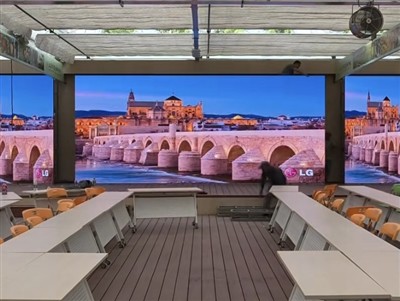
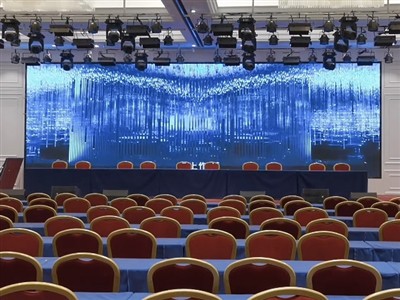
In high-traffic environments like retail stores, exhibition halls, and public venues, many LED poster screens suffer from noticeable flickering, scan lines when photographed, or motion blur during video playback. These issues often trace back to insufficient refresh rates, which determine how many times per second the screen updates its image.
Refresh rate, measured in Hertz (Hz), indicates the frequency at which the entire display refreshes the displayed content. For LED poster screens, values below 1,000 Hz frequently cause visible flicker under certain lighting or when captured by cameras, while rates of 1,920 Hz or higher deliver noticeably smoother motion and reduce eye strain during extended viewing. Premium configurations commonly reach 3,840 Hz, with some advanced systems pushing toward 7,680 Hz for ultra-high-end applications involving fast-moving content or video recording.
Several technical factors directly influence achievable refresh rates. The LED driver IC stands out as the most critical component. Standard driver chips typically limit performance to around 960 Hz. Dual-latch designs improve this significantly, and high-end PWM (Pulse Width Modulation) driver chips - especially those incorporating Scrambled PWM (S-PWM) technology - can boost rates to 3,840 Hz or more. S-PWM works by distributing the on-time of each LED across multiple shorter pulses within a frame while preserving the overall brightness ratio. This approach multiplies the effective visual refresh rate without requiring excessively high clock speeds, minimizing electromagnetic interference and power surges.
Scan mode also plays a key role. Lower scan ratios (such as 1/8 or 1/16) combined with optimized driver ICs help balance brightness, power consumption, and refresh performance. In foldable or slim LED poster screens using GOB protection, careful thermal management becomes essential because dense LED arrays generate heat; inadequate dissipation can force systems to throttle refresh rates to maintain stability.
Practical optimization strategies focus on matching hardware capabilities with real-world needs. For standard indoor advertising with mostly static or slow-moving content, 1,920 Hz often suffices and keeps costs reasonable. Retail or exhibition settings that involve video playback or frequent smartphone photography benefit strongly from 3,840 Hz and above, as this level largely eliminates water ripples, black scan lines, and color banding in captured images. Content creators should also ensure the sending card, control system, and graphics source support the target refresh rate to avoid bottlenecks.
Energy efficiency and longevity improve with thoughtful optimization. Higher refresh rates paired with efficient PWM control maintain excellent gray scale (often 14-bit or 16-bit for over 16 million colors) while consuming less power overall compared with lower-performing setups running at full brightness to compensate for flicker. Intelligent brightness sensors can further adapt output dynamically, preserving visual comfort without sacrificing refresh performance.
Several considerations help avoid common pitfalls. Not every application demands the highest possible rate - over-specifying can increase costs and power draw unnecessarily. Brightness and refresh rate operate independently; a very bright screen can still flicker if the refresh rate remains low. During installation, point-by-point calibration combined with proper grounding and stable power supply prevents uneven refresh behavior across the panel. For portable foldable poster models, selecting units with robust driver ICs and adequate ventilation ensures consistent performance even after repeated setup and transport.
In practice, testing the screen with typical content and under expected lighting conditions reveals the true effectiveness of the refresh rate. High refresh performance pairs particularly well with fine pixel pitches like P2.5, delivering crisp, fluid visuals that engage passersby more effectively than lower-spec alternatives.
Overall, prioritizing quality driver ICs, appropriate scan configurations, and rates of 3,840 Hz or higher helps LED poster screens achieve reliable, flicker-free operation with smooth dynamic content. These optimization principles extend naturally to other LED display technologies, supporting consistent high-impact visuals across diverse commercial and architectural applications.