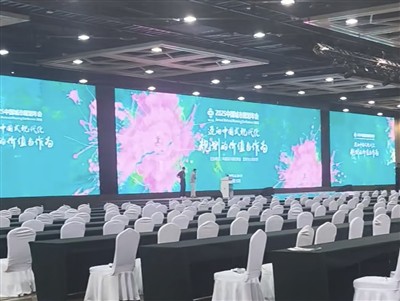
Many businesses in retail, exhibitions, and public venues wonder why some LED poster screens deliver crisp, vibrant visuals day after day while others show uneven brightness, heat issues, or shorter service life. The answer lies in the core technical specifications and protective technologies that define real-world performance.
At the heart of LED poster screens is the pixel pitch - the center-to-center distance between individual LED lamp beads, measured in millimeters. Common indoor poster models use P2.5 or similar fine pitches, delivering pixel densities around 160,000 dots per square meter. Smaller pitches create sharper images suitable for close viewing distances of 2 to 10 meters, while slightly larger pitches balance clarity with cost for broader applications. Higher pixel density directly improves resolution and detail, making text and graphics stand out even when viewers pass by quickly.
Brightness plays a critical role in visibility. Indoor or semi-outdoor LED poster screens typically achieve 800 to 2,500 cd/m², enough for most retail and lobby environments. Models exposed to stronger ambient light benefit from higher output, often reaching 4,000 cd/m² or more. Self-emissive LED technology ensures content remains clear without the backlight limitations of LCD screens, and intelligent sensors can automatically adjust brightness according to surrounding light levels for comfortable viewing and energy savings.
Refresh rate and gray scale determine smoothness and color depth. Quality LED poster screens operate at refresh rates of 1,920 Hz or higher - many reach 3,840 Hz - which eliminates visible flickering and scan lines, even under video cameras or varying lighting. Combined with 14-bit or higher gray scale processing, these displays reproduce up to 16.7 million colors with excellent saturation and smooth transitions in dynamic content like videos and animations.
Protective technologies significantly affect durability. Many modern foldable and standard poster screens incorporate GOB (Glue on Board), where a transparent optical resin layer covers the LED modules. This adds strong resistance to water, dust, moisture, impacts, and static electricity without sacrificing too much image quality. GOB helps extend lifespan in high-traffic or portable setups, though it may introduce a slight brightness reduction (typically 10-15%) that manufacturers compensate for through optimized LED selection and drivers. Traditional SMD packaging remains common for its balance of cost, color uniformity, and easier front maintenance.
Cabinet design influences practicality. Foldable LED poster models often feature ultra-slim profiles of 35-40 mm thickness and lightweight die-cast aluminum frames weighing around 35 kg per square meter. Built-in rotating casters and folding mechanisms allow one-person handling and quick multi-screen splicing with minimal seams. Power options include plug-in or rechargeable versions, while low-voltage DC supply reduces safety risks compared with higher-voltage systems.
Energy efficiency stands out as a practical advantage. LED poster screens generally consume 30-50% less power than equivalent LCD displays, thanks to self-emissive operation and efficient PWM (Pulse Width Modulation) control. Lifespans frequently exceed 100,000 hours when proper heat dissipation and ventilation are maintained, lowering long-term replacement and electricity costs.
Viewing angles typically reach 140° horizontal and vertical, though side angles can show some brightness drop-off or minor color shifts - a common characteristic of LED technology. Proper positioning facing main traffic flow helps minimize this effect. Contrast ratios often hit 6,000:1 or better on calibrated screens, delivering deeper blacks and more vivid images than many LCD alternatives.
When evaluating technical details, several factors deserve attention to avoid common issues. Ensure the chosen pixel pitch matches the actual viewing distance and screen size. Check for adequate thermal management, as dense LED arrays generate heat during continuous operation. Point-by-point calibration during installation promotes uniform brightness and color across the entire surface. High refresh rates and stable control systems (including constant current drivers) prevent flickering and support reliable 24/7 performance.
In essence, strong technical foundations in pixel pitch, brightness, refresh rate, protective layers like GOB, and efficient cabinet design determine how well an LED poster screen performs in demanding commercial environments. These same engineering principles apply across broader LED display solutions, from transparent curtain wall systems to creative large-format installations, helping deliver consistent visual impact and operational value.