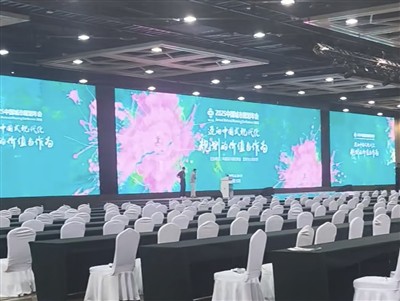
In busy commercial spaces such as shopping malls, retail stores, exhibition halls, airports, and hotels, many businesses face the same challenge: traditional static posters and banners often fail to capture attention amid bright lighting and fast-moving crowds. They require constant manual replacement, lack dynamic appeal, and struggle to deliver timely promotions or engaging visuals.
LED poster screens provide a modern, effective solution as self-contained, vertical floor-standing displays engineered for high-impact advertising. These screens use dense arrays of LED lamp beads that emit their own light, achieving strong brightness and vivid color reproduction that remain clear even in well-lit indoor environments or areas with ambient light. Their fast response times-measured in milliseconds-ensure smooth playback of videos, animations, and dynamic content without ghosting or lag, making them far more engaging than static alternatives.
Several types of LED poster screens cater to different operational needs. Classic models emphasize reliability with seamless multi-screen splicing capabilities, allowing units to combine into larger display walls without visible borders. Innovative foldable variants, commonly featuring pixel pitches like P2.5, stand out for their ultra-slim profiles (often around 35-40 mm thick) and lightweight die-cast aluminum construction. These designs fold compactly for easy transport on built-in casters, while technologies such as GOB (Glue on Board) add robust protection against water, dust, moisture, and impacts. Both fixed and foldable options support flexible content management through mobile apps or cloud platforms, enabling real-time updates to images, videos, and scrolling text without on-site intervention.
Choosing the appropriate model involves considering real-world factors like viewing distance and environment. For close-range indoor audiences-typically 3 to 20 meters away-finer pixel pitches deliver sharper details ideal for retail or exhibition settings. Brightness levels also matter: most indoor or semi-outdoor installations perform well between 800 and 2,500 cd/m², but any risk of strong daylight exposure benefits from 4,000 cd/m² or higher to maintain visibility. Compared with traditional LCD screens, LED poster screens generally consume 30-50% less power and offer lifespans exceeding 100,000 hours, which helps control long-term electricity and maintenance expenses.
Practical experience highlights several considerations to maximize performance and avoid pitfalls. Initial costs for high-resolution or larger configurations can appear higher than basic signage, but durability and reduced upkeep often offset this over time. Positioning plays a key role-side viewing angles may cause some brightness reduction or color shifts, so aligning screens with primary foot traffic flows helps ensure consistent viewer satisfaction. Dense LED arrays generate heat during extended operation, making good ventilation or built-in thermal management essential to prevent performance drops or shortened service life. Additionally, point-by-point calibration during installation promotes uniform brightness and color across the entire surface, avoiding dark spots or uneven patches that can detract from a professional look.
Content strategy further influences effectiveness. Bold, high-contrast visuals with clear messaging work best, as audiences often pass by quickly. Refresh rates above 1,920 Hz minimize flickering under varying lighting conditions, while modular designs support easy expansion or reconfiguration as needs evolve.
In summary, evaluating LED poster screens based on brightness, pixel density, durability features, and content flexibility helps achieve clear, cost-efficient results that outperform conventional advertising tools in dynamic commercial environments. These same principles of thoughtful selection and application extend to other advanced LED display solutions, such as transparent screens for modern architectural integrations, opening broader opportunities for impactful visual communication in today's competitive markets.