Which P-value is best for an LED screen?
I. Indoor Scenarios: From Close-up High Definition to Long-distance Economy Indoor environments demand high image quality, but viewing distances vary greatly, resulting in a wide range of P-values (P0.9-P4).
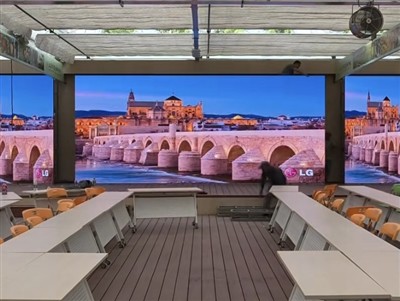
1. High-Definition Scenarios (Viewing Distance 2-4 Meters): P1.25 - P1.5 These scenarios include: small to medium-sized conference rooms (10-20 people), executive offices, product showrooms, live streaming rooms, and studios. Viewers are typically 2-4 meters away from the screen, requiring high sharpness of text edges and image detail. Screens with P1.25 to P1.5 have sufficiently high pixel density; even at 1.5 meters, pixelation is almost imperceptible, providing an excellent experience when playing 4K videos or complex data tables. The disadvantages are higher cost (typically 15,000-30,000 RMB/㎡) and strict requirements for the installation environment (heat dissipation, flatness). Suitable for users with ample budgets who seek the ultimate experience.
2. Entry-level Small Pitch (Viewing distance 3-5 meters): P1.8 - P1.875 This is currently the most mainstream range in the indoor small pitch market, often referred to as the "golden range for cost-effectiveness." With P1.8/P1.875 screens, pixelation is virtually invisible at a distance of 3 meters, meeting the needs of most ordinary meeting rooms, classrooms, training rooms, and corporate lobbies. Compared to P1.5, the number of LEDs per square meter is reduced by approximately 40%, resulting in a cost reduction of approximately 30-50% (currently around 8000-15000 RMB/㎡). For users with limited budgets who still desire a seamless small pitch experience, P1.8 is recommended as a starting point.
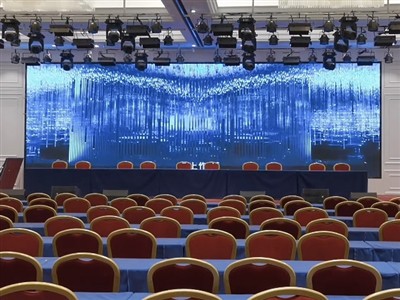
3. Medium Resolution (Viewing distance 4-6 meters): P2.5 / P2 P2.5 (2.5mm pixel pitch) was once a classic specification for indoor full-color screens and is still widely used. Pixelation is not noticeable at a distance of 4-5 meters, sufficient for general PPT presentations, video playback, and information dissemination. P2 falls between P1.8 and P2.5, suitable for users with a viewing distance of 3.5-4.5 meters who want more detail than P2.5 but can't afford P1.8. These two levels are less expensive (P2.5 is approximately 3000-6000 RMB/㎡), making them practical choices for medium-sized conference rooms, data center monitoring screens, and shopping mall floor wayfinding screens.
4. Long-distance or low-cost scenarios (viewing distance over 6 meters): P3 / P4 If the conference room or lobby is deep (the front row viewers are more than 6 meters from the screen), or if the budget is very limited, P3 or even P4 can be considered. At this distance, the human eye can hardly distinguish the pixels of P3 or P4. P3 or P4 are often chosen for atrium screens in large shopping malls, information screens in train station waiting halls, and factory workshop billboards to significantly reduce initial investment. However, it should be noted that this type of screen is not suitable for displaying small text or fine charts.
II. Outdoor Scenarios: Long Distance is King, P5 as the Starting Point
Outdoor displays face challenges such as long-distance viewing, strong ambient light, and harsh weather. Therefore, the pixel density requirements are much lower than indoors, but the requirements for brightness, waterproofing, and weather resistance are extremely high.
1. Close-up Outdoor Scenarios (Viewing Distance 4-8 meters): P4 - P5 In a very few outdoor scenarios-such as embedded screens on building facades or bus stop information screens-viewers can approach within 5 meters. In these cases, P4 or P5 can be chosen, balancing a certain level of detail with outdoor brightness (≥4500 nits). However, this type of application is less common because outdoor screens are usually located at high altitudes or in open areas.
2. Standard Outdoor Advertising (Viewing Distance 8-15 meters): P6 - P8 This is the most mainstream range for outdoor LED screens. P8 is particularly classic; at 8 meters, the pixelation is not noticeable, the brightness can reach over 5500 nits, it can resist direct sunlight, and the cost is moderate (approximately 2500-4000 RMB/㎡). Suitable for building billboards, highway-side pillar screens, stadium grandstand fence screens, etc.
3. Long-distance large-scale advertising (viewing distance over 15 meters): P10 - P16 For billboards installed hundreds of meters away, and circular screens on the top of super high-rise buildings, where the audience distance is extremely far, P10 or even P16 can be selected. At this point, the number of pixels per unit area is very low, but the cost is extremely low, and the information remains clearly readable even at a long distance. This type of screen is often used to display large slogans, brand logos, or simple dynamic images.
III. Budget Considerations: Avoid Blindly Pursuing Small P-values
"The smaller the P-value, the better" is a common misconception. Excessively pursuing small pitch will not only significantly increase the budget, but in some scenarios, it may even be counterproductive.
1. Costs Increase Exponentially with P-value
The cost of an LED screen is mainly determined by the number of LED chips. The LED chip density of P1.2 is about 4.3 times that of P2.5, and the requirements for driver ICs, PCB processes, and surface mount precision are increased exponentially. 1. A 10㎡ screen with a P2.5 resolution might cost only 30,000-40,000 yuan, while a P1.2 version could exceed 200,000 yuan. For most ordinary meeting rooms, using this budget to improve sound systems, lighting, or interior design would likely result in a more significant improvement in the overall meeting experience.
2. A low P-value is wasteful at long distances. If the viewing distance exceeds 6 meters, the visual difference between P1.5 and P2.5 is almost imperceptible to the human eye, but the cost difference can be 2-3 times. In such scenarios, choosing the more economical P-value is the rational decision.
3. Balancing control system and maintenance costs. Small-pitch screens require higher computing power and bandwidth from the control system (sending and receiving cards), and subsequent maintenance of the small-pitch modules is also more difficult and costly. These hidden costs should be included in the budget when selecting a screen.