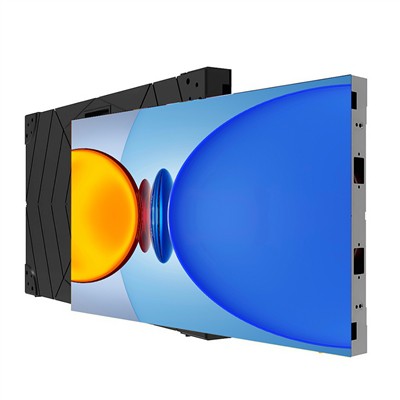
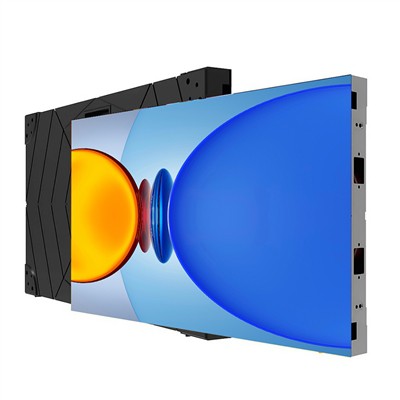
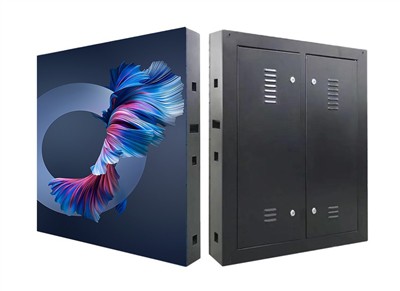
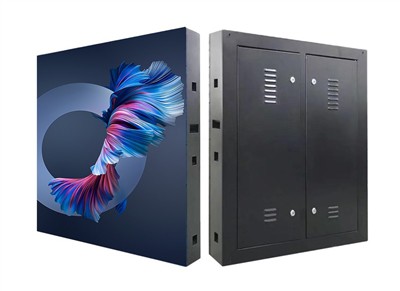
When choosing a full-color LED display for a hotel, it's essential to consider the indoor environment, viewing needs, and technical parameters. Key selection points are as follows:
I. Choose Pixel Type Based on Viewing Distance and Scene
Real Pixels: Each pixel is composed of an independent LED chip, resulting in a realistic display but lower pixel density. Suitable for close to medium distance viewing (e.g., hotel lobby information displays).
Virtual Pixels: Simulates higher resolution by sharing adjacent LED chips through software algorithms. Pixel density can be increased several times, suitable for long-distance viewing (e.g., banquet hall background screens), but may appear grainy at close range.
Selection Recommendation: If the display is used to play high-definition video or text information and the audience is relatively close (e.g., 3-10 meters), prioritize real pixels. If used for long-distance dynamic displays (e.g., over 10 meters), virtual pixels can reduce costs while meeting clarity requirements.
II. Chip Quality Determines Display Effect and Lifespan
Key Indicators: The luminous efficiency, decay rate, and anti-static capability of the LED chips directly affect the brightness, color uniformity, and lifespan of the display.
Selection Recommendations: Prioritize brand-name LED chips (such as Cree, Nichia Chemical, Sanan Optoelectronics, etc.), as they offer high luminous efficacy (>100lm/W) and slow decay (<30% decay after 50,000 hours).
Avoid using inferior chips, as they may cause inconsistent brightness, color shifts, or short lifespan (significant decay within 1-2 years).
III. Packaging Form Affects Viewing Angle and Processing Cost
Mainstream Packaging Types and Characteristics:
Three-in-One Surface Mount: Red, green, and blue LEDs are packaged in the same unit. Wide viewing angle (horizontal/vertical ≥160°), good light emission consistency, suitable for automated soldering, but higher cost.
Single Lamp: Single-color LED is individually packaged. Narrower viewing angle (approximately 120° horizontally), higher brightness, but poor color mixing effect. Lower price, mostly used in low-end applications.
Sub-Surface Mount: An improved version of the single lamp, with viewing angle and brightness between single lamps and surface mount LEDs. Lower cost, but gradually being phased out.
Selection Recommendations: For hotel settings, where viewing angle and color uniformity are crucial, prioritize 3-in-1 surface mount technology (SMT). If budget is limited and display quality requirements are less stringent, consider single-lamp or sub-surface mount technology (SMT).
IV. Dot Density Must Match Viewing Distance and Content
Relationship between Density and Clarity: Higher dot density (e.g., P2.5, P3, P4) results in smaller pixel pitch, leading to finer text and images when viewed up close. However, excessive density increases heat generation and cost.
Common Densities Applicable Scenarios:
P2.5-P3: Suitable for viewing distances of 3-8 meters, such as hotel conference rooms and small banquet halls.
P4: Suitable for viewing distances of 5-15 meters, such as hotel lobbies and large banquet hall backdrops.
P5 and above: Suitable for viewing at distances of 10 meters and above; lower cost but noticeable pixelation up close.
Selection Recommendations: Choose based on the display's installation location and the average viewing distance to avoid excessively pursuing high density and wasting costs.
V. Driving Method Affects Brightness and Stability
Constant Current Drive: All LEDs are powered by a constant current, resulting in uniform brightness and a long lifespan, making it the standard for indoor full-color screens.
Scanning Method:
1/4 Scan: Each frame is refreshed 4 times, resulting in higher brightness (suitable for bright environments), but with more complex circuitry and slightly higher cost.
1/8 Scan: Each frame is refreshed 8 times, resulting in lower brightness (suitable for low-light environments), but with lower cost.
Selection Recommendation: If the display screen is installed near a window or in a well-lit area, choose 1/4 scan; if in a low-light indoor environment, 1/8 scan can reduce costs.
VI. Other Key Considerations
Brightness: The recommended brightness for indoor screens is 200-800 cd/㎡. Too high a brightness will be glaring, while too low a brightness will make it difficult to see.
Contrast Ratio: ≥3000:1 ensures clear text and images, avoiding a hazy effect.
Refresh Rate: ≥1920Hz eliminates water ripples during shooting, suitable for live streaming or video recording scenarios.
Heat dissipation design: Choose modules with fans or heat sinks to avoid overheating that could cause lamp failure or shorten lifespan.
After-sales service: Require suppliers to provide at least a 3-year warranty and have localized repair capabilities.
Summary: The selection of a hotel full-color LED display requires balancing display effect, cost, and viewing distance:
High-end scenarios (e.g., banquet hall main screen): Choose a 3-in-1 surface mount LED display, P2.5-P3 resolution, 1/4 scan.
Mid-range scenarios (e.g., lobby information screen): Choose a 3-in-1 surface mount LED display, P4 resolution, 1/8 scan.
Budget-limited scenarios (e.g., corridor indicator screen): Single lamp, P5 or higher resolution, 1/8 scan. It is essential to request sample screens from suppliers for testing; observe brightness, color, and viewing angle performance before making a decision.