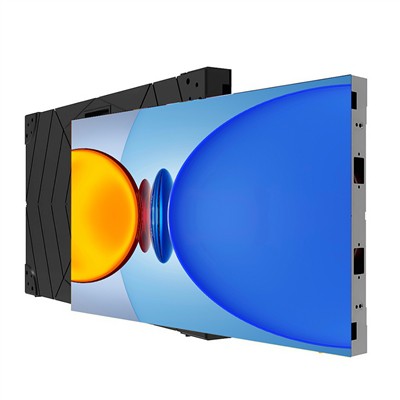
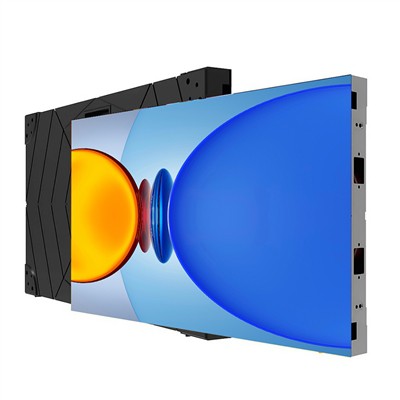
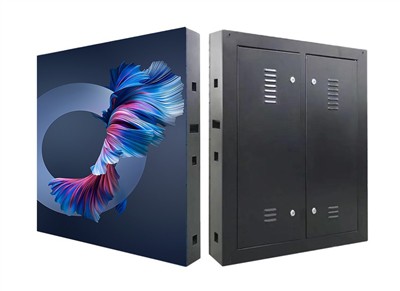
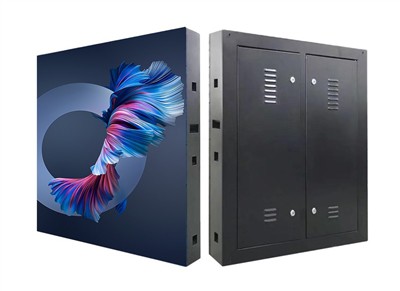
The viewing angle of a roll-up LED display is affected by the following factors:
1. LED Chip Packaging Method
Mechanism of Influence: Packaging technology determines the light scattering angle of the LED chip. Different packaging methods (such as surface mount and through-hole) cause light to propagate at different angles, directly affecting the screen's viewing range.
Optimization Suggestion: Choosing LED chips with wide-viewing-angle packaging technology (such as surface mount packaging) can expand the light scattering range and improve the viewing angle.
2. Pixel Density
Mechanism of Influence: Higher pixel density means more pixels per unit area, resulting in richer image details. High pixel density reduces graininess when viewed at large angles, keeping the image clear at wider angles.
Optimization Suggestion: Increasing pixel density by reducing pixel pitch (e.g., using a pitch below P1.5) enhances image clarity at large angles.
3. LED Chip Arrangement
Mechanism of Influence: The arrangement structure of the LED chips (such as matrix arrangement and staggered arrangement) affects the light propagation path. Specific LED arrangement methods (such as polarized designs) can distribute light more evenly over a wider angle, reducing viewing angle attenuation.
Optimization suggestion: Adopt an optimized LED arrangement scheme (such as virtual pixel technology) and improve viewing angle through algorithmic compensation.
4. Display Structure and Design
Influencing Mechanisms:
Screen Curvature: Curved designs may cause uneven light propagation in different directions, resulting in limited viewing angles in some areas.
Thickness and Transmittance: Screen thickness affects light penetration; excessive thickness may reduce lateral visibility; insufficient transmittance weakens brightness, indirectly affecting viewing angle performance.
Optimization suggestion: Choose a flat or slightly curved structure according to the needs of the scenario, and control the screen thickness within a reasonable range (e.g., ≤10mm) to balance structural strength and visibility.
5. Viewing Distance and Angle
Influencing Mechanisms:
Distance: When the viewing distance is too close, pixelation is enhanced, and the image is prone to distortion at large angles; when the distance is too far, brightness attenuation is significant.
Angle: The attenuation rate of vertical and horizontal viewing angles differs; generally, vertical viewing angles are affected by gravity and attenuate faster.
Optimization Recommendations: Calculate the optimal viewing distance based on screen size and resolution (e.g., using the formula "viewing distance = pixel pitch × 1000"), and adjust the installation height to match horizontal viewing angle requirements.
6. Ambient Lighting Conditions
Influencing Mechanisms:
Strong Light Environment:Reflected ambient light reduces screen contrast, causing image blurring when viewed from the side.
Low Light Environment: Excessive screen brightness may cause glare, affecting viewing comfort.
Optimization Recommendations:
Add an anti-reflective coating or use a matte surface treatment to reduce ambient light interference.
Equip with an automatic brightness adjustment function to dynamically adjust screen brightness based on ambient light intensity.
Comprehensive Optimization Strategy
Design Phase:Prioritize wide-viewing-angle packaged chips, high-density pixel solutions, and optimized LED arrangement.
Installation Phase: Adjust screen curvature, thickness, and viewing distance according to the scenario to ensure uniform light distribution.
Usage Phase: Monitor lighting conditions in real-time using an ambient light sensor and dynamically optimize brightness and contrast parameters.
By systematically integrating the above factors, the viewing angle performance of roller shutter LED displays can be significantly improved in multiple scenarios, meeting the diverse needs of commercial displays, stage performances and other fields.