Projector vs. TV vs. LCD Video Wall? Common Selection Mistakes for SMEs' Meeting Rooms
For SMEs choosing display equipment for their meeting rooms, TVs are the first choice, followed by projectors, and lastly, LCD video walls. The following analysis, from three dimensions-equipment characteristics, suitable meeting room scenarios, and budget matching-helps businesses avoid common selection pitfalls:
I. Equipment Characteristics Comparison
TV (Commercial Monitor/Flat-screen TV)
Core Advantages: High stability, high definition, accurate color, and moderate price. Commercial TVs are designed for long-term operation and have a low failure rate; flat-screen TVs (smart screens) integrate touch writing, wireless projection, and other functions, improving collaboration efficiency.
Light Source Type: LED backlight, uniform brightness, no need for frequent light source replacement.
Suitable Scenarios: Text, charts, video presentations, and meetings requiring interactive annotation.
Projector
Core Advantages: Lower price, high portability, suitable for temporary or mobile meeting rooms.
Light Source Types:
Traditional Bulbs: High brightness but short lifespan (approximately 3000-5000 hours), requiring regular replacement;
LED Light Sources: Long lifespan (approximately 20,000 hours), but lower brightness;
Laser Light Sources: High brightness and long lifespan (over 20,000 hours), but higher price;
Hybrid Light Sources: Combines LED and laser technologies, balancing performance and cost.
Key Limitations: Brightness and clarity are greatly affected by ambient light, requiring the use of an anti-glare screen; long-term use may lead to image quality degradation due to dust accumulation.
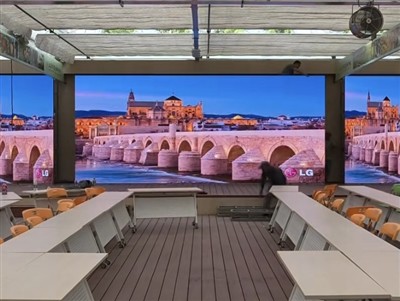
LCD Video Wall (LED Video Wall)
Core Advantages: Supports ultra-large sizes (e.g., 100 inches and above) or irregular screen splicing, suitable for large-scale display scenarios.
Key Limitations: High cost (tens of thousands of yuan per screen), high maintenance costs (requires professional personnel to adjust splicing gaps), and relatively high power consumption.
Applicable Scenarios: Monitoring centers, exhibitions, and other scenarios with extreme screen size requirements, rather than everyday conference rooms.
II. Meeting Room Suitability Analysis
Based on meeting room size, meeting content, and budget, equipment selection can be done using a three-step decision-making method:
Step 1: Consider Meeting Room Size and Number of Attendees
Small meeting rooms/negotiation rooms (less than 10 people):
Recommended equipment: 65-75 inch TV.
Reason: The size is sufficient to cover a small viewing area, and the clarity and stability of a TV are superior to projectors in the same price range.
Medium meeting rooms (10-30 people, most common):
Recommended equipment: 86-100 inch TV.
Reason: At a viewing distance of 4-6 meters, a TV ensures all attendees can clearly see text and charts; a projector in this scenario requires an ambient light rejecting screen, which is close in cost to a TV but still inferior in image quality.
Large meeting rooms/training rooms (more than 30 people):
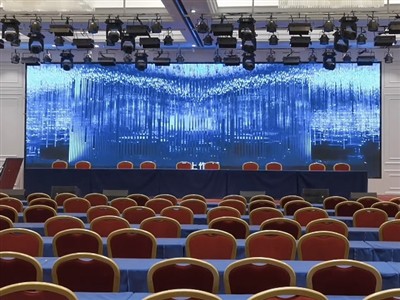
Recommended equipment: High-brightness laser projector (with ambient light rejecting screen) or small-pitch LED screen (for extremely high budgets).
Reasons: First, consider the following: TV screens have limited size, while laser projectors strike a balance between brightness and cost; LED screens, although offering excellent image quality, are expensive and only recommended for companies with sufficient budgets.
Second, consider daily meeting content:
Mainly for displaying PPTs, Word documents, Excel spreadsheets, and web pages:
Recommended device: TV.
Reason: Sharp text and lines, accurate colors, avoiding the blurring issues caused by ambient light in projectors.
For frequent brainstorming sessions, flowchart drawing, and annotation/revision:
Recommended device: Flat-screen TV (smart screen).
Reason: Integrated touch writing function, supporting simultaneous annotation by multiple users, resulting in significantly higher collaboration efficiency than traditional projectors or TVs.
Mainly for playing high-definition videos and product promotional videos:
Recommended device: TV.
Reason: TVs offer superior color reproduction and brightness compared to projectors, maintaining clear image quality even in bright environments.
Third, consider the budget:
Budget 10,000-30,000 RMB:
Recommended device: 86-98 inch commercial TV.
Reasons: Highest cost-performance ratio, suitable for medium-sized conference rooms, with better stability and image quality than projectors in the same price range.
Budget 30,000-50,000 RMB:
Recommended Equipment: High-end 98-100 inch TV or conference flat panel.
Reasons: Higher image quality (e.g., 4K resolution) or interactive features (e.g., touch writing), suitable for companies with high demands for collaborative efficiency.
Budget below 10,000 RMB:
Recommended Equipment: 75-inch TV (small conference room) or laser projector (large conference room, subject to ambient light limitations).
Reasons: Small-sized TVs meet basic needs; laser projectors provide large screens on a low budget, but require strict control of conference room lighting.
III. Common Selection Misconceptions and Avoidance Guidelines
Misconception 1: Blindly pursuing large screen size, ignoring viewing experience
Avoidance Suggestion: Choose the size according to the viewing distance in the conference room. For example, a conference room for 10-30 people needs an 86-100 inch TV to ensure clear readability of text at a distance of 4-6 meters.
Myth 2: Underestimating the impact of ambient light on projectors
Remedy: If choosing a projector, it must be paired with an ambient light rejecting screen, and the ambient light in the meeting room must be controlled (e.g., using blackout curtains). Otherwise, image quality will significantly degrade during daytime use.
Myth 3: Ignoring equipment maintenance costs
Remedy: LCD video walls require professional adjustment of the splicing gaps, and damage to a single screen can cause overall display abnormalities; projectors require regular replacement of the light source (traditional bulb) or cleaning of dust. Televisions have the lowest maintenance costs and are suitable for companies with limited budgets.
Myth 4: Paying a premium for "high-end" features while neglecting core needs
Remedy: If the meeting primarily involves text presentations, there's no need to pursue 4K or HDR features; if interactive annotation is not required, the touch functionality of a flat-screen TV may be redundant. Prioritize stability, clarity, and brightness-the three core performance indicators.
Figure: Flowchart of the Three-Step Decision-Making Method for Selecting Meeting Room Equipment
Figure: Correspondence between Different Meeting Room Sizes and Recommended Equipment
Summary: For small and medium-sized enterprises (SMEs), televisions (commercial monitors or flat-screen TVs) should be prioritized in meeting rooms due to their optimal stability, clarity, and cost-effectiveness. If the budget is limited or temporary use is required, laser projectors can be considered. LCD video walls are only recommended for companies with extremely high budgets and specific screen size requirements. By using the "three-step decision-making method" to match meeting room size, content, and budget, selection pitfalls can be effectively avoided, and meeting efficiency can be improved.