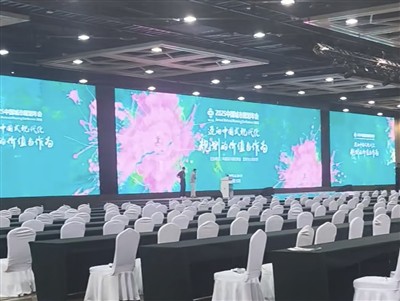
How to Use a 55-inch Color-Difference-Free Video Wall and a 100-inch Outdoor Advertising Display
The usage methods for a 55-inch color-difference-free video wall and a 100-inch outdoor advertising display are as follows:
55-inch Color-Difference-Free Video Wall Usage Methods
Environmental Adaptability Adjustment: This video wall features high brightness (over 700 cd/㎡) and stable light emission characteristics, maintaining clear display under high-intensity lighting or sunlight without the need for additional brightness adjustments.
In dimly lit environments or environments with significant parallax, its stable image output and fast response speed (reflecting dynamic details) ensure image quality without manual adjustment.
Brightness remains stable without decay during long-term operation, making it suitable for scenarios requiring continuous display (such as monitoring centers and exhibitions).
Color Calibration and Display Optimization:
Utilizing Samsung's exclusive calibration technology, it automatically calibrates the color of dynamic images, achieving a color saturation of up to 99% (compared to only 72% for ordinary CRT/LCD displays), eliminating the need for manual color calibration by the user.
Suitable for scenarios with high color reproduction requirements (such as advertising design and video playback), it achieves optimal results simply by connecting to the signal source.
Installation and Maintenance:
The video wall must be installed by professionals to ensure physical alignment and signal synchronization when multiple screens are spliced.
Regularly clean the screen surface to remove dust, avoiding the use of corrosive cleaning agents; check the uniformity of the splicing seams to prevent misalignment due to external force.
100-inch Outdoor Advertising Machine Usage Instructions
Preparation Before Installation:
Carefully read the product manual and confirm that the local voltage matches the equipment requirements (e.g., input voltage range).
Check that the installation location meets the IP65 protection standard (dustproof and waterproof), avoiding immersion in liquids or direct exposure to heavy rain.
Installation and Fixing:
The advertising machine must be securely installed on the ground or a fixed bracket as required by the manual to prevent it from tipping over due to wind or human impact.
Avoid proximity to open flame sources (such as barbecue stalls or heating equipment), and do not use it near open flames.
Ensure that the equipment surface is free of coverings (such as cloth or plastic film) to prevent affecting heat dissipation and damaging internal components.
Precautions for Use:
After prolonged exposure to sunlight, the LCD screen and casing surface temperature may rise; avoid direct contact to prevent burns. Regularly check the equipment casing for damage to prevent rainwater ingress; disconnect the power before cleaning and wipe the surface with a dry cloth.
Internal component maintenance must be performed by qualified personnel; unauthorized disassembly is prohibited.
Content Updates and Operation:
Update playback content (such as videos and images) via remote control or USB interface, ensuring file formats are compatible with device requirements.
Set up a timed power-on/off function to avoid wasting power during non-use periods; adjust screen brightness according to ambient light (some models support automatic adjustment).
General Recommendations
Scenario Adaptation:
55-inch video wall displays are suitable for indoor close-range viewing (e.g., conference rooms, shopping mall navigation); multi-screen splicing can expand the display area.
100-inch outdoor advertising displays are suitable for long-distance information transmission (e.g., plazas, transportation hubs); windproof, sunproof, and anti-theft measures should be prioritized.
Energy Management:
Video wall displays are energy-efficient and environmentally friendly, capable of 24-hour operation; outdoor advertising displays require setting power-on/off times according to actual needs to reduce energy consumption.
Safety Specifications:
Both require grounding protection to prevent damage from lightning strikes or static electricity; outdoor advertising machines must be equipped with additional leakage protection devices.