LED Backdrop Display: Uses, Setup & Key Considerations
A backdrop LED screen transforms what would otherwise be a bare wall or plain stage into a dynamic visual environment that amplifies the impact of any performance or presentation. Whether you're considering a backdrop led display for a concert, conference, corporate event, or broadcast production, understanding how these screens are configured and what specifications matter will help you plan effectively. This guide covers the key considerations.
What Is a Backdrop LED Screen?
A backdrop led screen is a large-format direct-view LED display positioned behind the main subject of a performance, presentation, or production - serving as both a functional display showing content and a visual environment that frames and enhances what's happening in front of it. The "backdrop" position distinguishes this application from audience-facing screens or side screens: the led screen backdrop is behind the performer or presenter, visible to the audience looking toward the stage or front of the room.
Unlike a fixed LED video wall installed permanently in a building, a backdrop led display is typically configured specifically for each event - built from rental-grade modular panels, rigged to a temporary structure, and removed after the event concludes. Permanent backdrop installations exist in broadcast studios and television production environments, where a consistent backdrop is part of the set design.
Common Applications for LED Backdrop Displays
| Application | Role of the Backdrop LED Screen |
|---|---|
| Concerts and music performances | Visual content synchronized with music; brand/artist imagery |
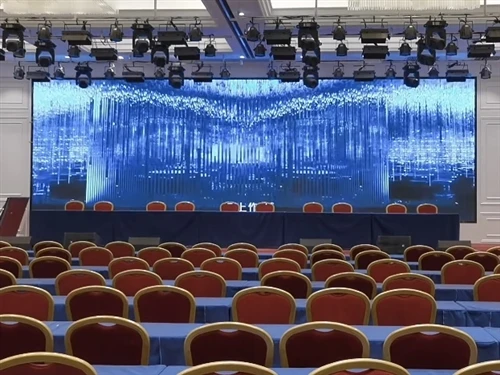
| Corporate conferences | Presentation content, branding, speaker support |
| Award ceremonies and galas | Logo, event branding, video content |
| Television and broadcast studios | Virtual set backgrounds, branded studio environments |
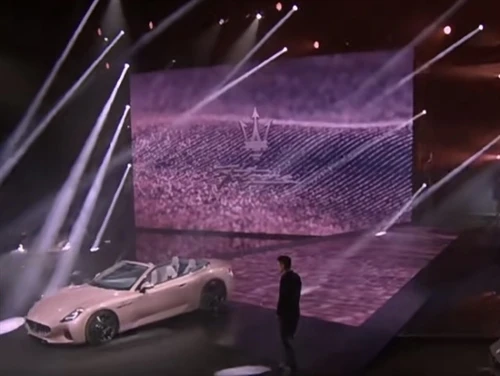
| Product launches | Visual storytelling, product reveal content |
| Theater and performing arts | Dynamic set design element, scene transitions |
| Religious events and worship services | Lyric display, ambient visual content |
| Esports and gaming events | Gaming content, sponsor branding, live feeds |
In each of these contexts, the led backdrop display serves both a functional purpose (displaying content relevant to the event) and an aesthetic one (creating a visual environment that enhances the overall production quality).
Key Specifications for a Backdrop LED Display
Pixel Pitch and Audience Viewing Distance
Pixel pitch (the center-to-center distance between adjacent pixels, measured in millimeters) should be selected based on the minimum expected audience viewing distance in the specific venue. For small conference rooms or theater spaces where the audience is close to the stage, a finer pixel pitch produces noticeably sharper backdrop content. For large concert venues where most of the audience is further from the stage, a coarser pitch is often adequate and more cost-effective.
Refresh Rate for Filming
Refresh rate (Hz - how many times per second the image is redrawn) is particularly important for any backdrop led screen that will be filmed for live broadcast, streaming, or recording. Higher refresh rates reduce visible scan lines or flicker in footage that would otherwise be distracting in recorded material. For television studios and broadcast productions, this is often the most critical display specification after basic image quality.
Screen Size and Aspect Ratio
Backdrop screens are often specified with a particular width-to-height ratio (aspect ratio) in mind - either to suit the content being shown or to match the specific dimensions of the stage or set. Modular LED panels can be configured to almost any total size and aspect ratio, making this flexible, but the target dimensions need to be confirmed against both the venue's physical constraints and the content production requirements.
Structural Rigging and Support
A backdrop led display is typically suspended from a rigging structure (a system of truss, motors, and attachment points used to support and position equipment above a stage) or supported on ground-support towers positioned behind the stage. The rigging or ground support system must be designed to carry the combined weight of the LED panels and any additional scenic elements, with appropriate safety factors. Involving an experienced rigging engineer for any significant installation is advisable.
Renting vs. Purchasing a Backdrop LED Screen
For most event applications, renting a backdrop led display from a specialist supplier is more practical than purchasing, since the panels are used temporarily and storage and maintenance between events adds cost for infrequent users. Rental packages for backdrop screens typically include the panels, video processor, rigging or ground-support structure, and installation by a technical crew.
For permanent applications - broadcast studios, fixed venue stages, houses of worship with regular events - purchasing offers better long-term economics and control over the installation. In these cases, LED panels designed for fixed installation (often with front-access serviceability for easy maintenance) are generally more appropriate than rental-grade panels.
Content Considerations for LED Backdrop Displays
Content for a led backdrop display plays a significant role in the overall visual impact of the production. A few practical points are worth considering in content planning:
Content should be produced at the actual resolution of the backdrop screen to avoid visible pixelation or unnecessary scaling.
High-contrast content generally reads better on camera than low-contrast gradients, which can appear flat or washed out under stage lighting.
If live camera feeds are displayed on the backdrop, the camera's exposure settings and the screen's brightness level need to be coordinated to avoid the screen appearing overexposed in wide shots.
For broadcast backdrops, content specifically designed for camera rather than naked-eye viewing may produce better-looking results in recorded footage.
Summary
A backdrop LED screen is a versatile and visually impactful format for live events, performances, and broadcast productions, serving both functional display and aesthetic environment-building roles simultaneously. Key specifications - pixel pitch suited to viewing distance, refresh rate for broadcast-friendly performance, and appropriate screen dimensions for the venue - together with reliable rigging and well-produced content determine whether a led backdrop display genuinely enhances an event. For most event applications, rental from an experienced supplier is the practical starting point; for permanent installations, purchasing panels with front-access serviceability is generally advisable.
FAQ
Q: What pixel pitch is best for a backdrop led display?
A: This depends on the minimum viewing distance of your audience in the specific venue. A general industry guideline is that comfortable viewing distance in meters is roughly comparable to pixel pitch in millimeters. For small conference or theatrical spaces with close audiences, finer pitch is worth the investment; for large concert venues where most of the audience is at distance, coarser pitch is typically adequate.
Q: Why is refresh rate important for a backdrop led screen used in broadcast?
A: Camera sensors capture images at specific frame rates, and a display with a low refresh rate can appear to flicker or show visible scan lines in recorded footage even when it looks perfectly stable to the naked eye. Higher refresh rates synchronize better with camera capture, resulting in clean, flicker-free footage - an important consideration for any broadcast or streaming production.
Q: Can a backdrop LED screen be rented for a one-day event?
A: Yes - rental led backdrop display packages are available for single-day events and are a common choice for conferences, galas, product launches, and similar occasions. Rental packages typically include delivery, setup, technical support during the event, and breakdown, making them a practical option for temporary use.
Q: How is a led backdrop display supported safely above a stage?
A: Backdrop LED screens are typically suspended from rigging structures - truss systems supported by motors or ground-support towers - engineered specifically to carry the weight of the assembled panels. The rigging design must be performed by or reviewed by a qualified rigging engineer for any significant installation. Safety factors, attachment point ratings, and venue structural capacity all need to be verified before rigging.
Q: What size should a led screen backdrop be for a conference stage?
A: The appropriate size depends on the stage width, ceiling height, and the viewing distance of the audience in the specific venue. A general approach is to size the screen so it fills a visually significant portion of the stage backdrop without being disproportionately large relative to the performers. Sharing your venue dimensions and layout with the rental supplier or installer allows them to recommend suitable configurations.