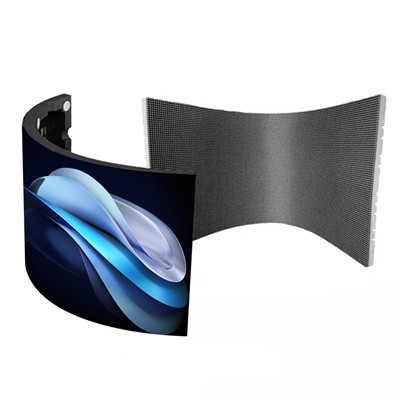
When troubleshooting display issues or selecting components for LED display screens in commercial, industrial, or professional setups, the role of the timing control board often raises questions. Known as the TCON board, this component plays a specialized part that differs significantly from other key boards in the system, directly affecting image stability, refresh performance, and overall visual quality.
The TCON board serves as the critical interface between the main scaler board and the LCD panel itself. While the main scaler board (sometimes called the main board) handles video input processing, decoding, image scaling, color enhancement, and smart features, the TCON focuses exclusively on precise timing and signal conversion tailored to the panel's drivers. It takes LVDS or similar signals from the scaler and converts them into Mini-LVDS or other panel-specific formats, generating the exact gate and source driver signals needed to control each pixel.
In functional terms, the TCON manages several core tasks that set it apart. It controls timing signals such as horizontal and vertical synchronization, pixel clock, and data enable pulses to ensure pixels update smoothly without tearing or artifacts. It also generates and distributes multiple voltage levels required by the panel, including gate high (VGH) and gate low (VGL) voltages for turning TFT transistors on and off, AVDD for source driver output, DVDD for logic circuits, and VCOM for the common electrode. Additionally, the TCON works with gamma correction circuits to optimize brightness and color response according to human visual perception.
Compared to the backlight driver system (DBS), which focuses solely on powering and dimming the LED array through constant current and PWM control, the TCON operates at the image data level. The DBS ensures uniform or zoned backlight illumination, while the TCON synchronizes that illumination with precise pixel data to form sharp, flicker-free images. A failure in the TCON often results in horizontal lines, color shifts, or complete loss of picture, whereas DBS issues typically manifest as brightness problems or uneven backlighting.
When stacked against the main scaler board, the differences become even clearer. The scaler processes incoming HDMI, VGA, or other external signals, performs upscaling or frame rate conversion, and outputs a standardized video stream. The TCON then takes that stream and adapts it specifically to the physical characteristics of the attached panel, including refresh rate management and signal level shifting. This division of labor allows greater flexibility - the same scaler can potentially work with different panels, but the TCON is usually panel-specific for optimal performance.
In LED display screens, a high-quality TCON board becomes especially important when paired with advanced features such as local dimming or high refresh rates. It ensures that dynamic backlight changes align perfectly with pixel data, preventing ghosting or timing mismatches. For medium-sized panels (10–32 inches) used in industrial monitors or vehicle systems, the TCON integrates tightly with both the DBS and power management circuits to maintain stable operation under varying conditions.
Practical considerations help when comparing or specifying TCON boards. Checking supported signal interfaces (LVDS, Mini-LVDS, or eDP), voltage generation capabilities, and refresh rate handling ensures compatibility with the chosen panel. In high-usage environments, a robust TCON with effective thermal management and protection features reduces the risk of premature failure. Integration testing between the scaler, TCON, and DBS during system design avoids common post-installation issues like flickering or uneven brightness.
In summary, while the main scaler board manages content processing and the DBS handles LED backlight power, the TCON board uniquely delivers precise timing control and signal adaptation that bring the entire image to life in LED display screens. Understanding these functional differences allows for better component selection, smoother system integration, and more reliable long-term performance across commercial signage, industrial equipment, and specialized display applications. For optimized LED display screen solutions, paying close attention to TCON capabilities remains essential to achieving consistent, high-quality visuals.