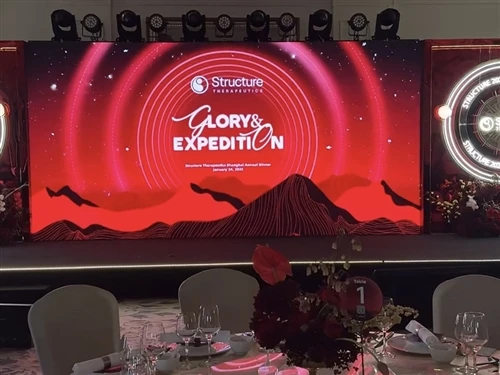
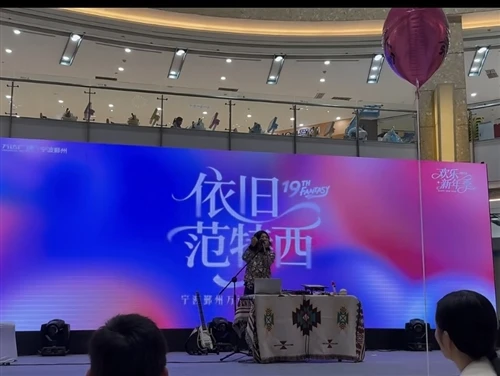
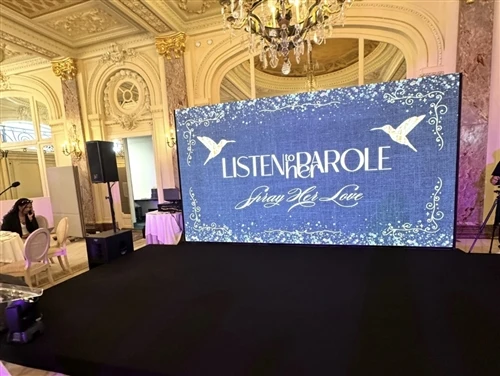
Currently, more and more LED displays are being used indoors, especially in large hotels and supermarkets, where they are gaining favor with advertisers. So, what are the requirements for large hotels when choosing LED indoor full-color screens?
In indoor environments, large full-color LED electronic displays with an area greater than 5m2 mainly have three options: ordinary rear projection, DLP (Digital Light Processing), and LED displays. Let's explore seven common indoor LED display models and their application solutions.
The advantages of rear-projection displays are small pixel pitch and high definition, while the disadvantages are low brightness, small viewing angle, and short lamp life (only a few thousand hours). The advantages of plasma splicing are also small pixel pitch and high definition, but the disadvantage is the presence of seams; currently, the smallest seam can reach 1mm. Rear-projection and plasma displays are suitable for viewing at close distances. The advantages of LED displays are high brightness and no seams, while the disadvantage is that the pixel particles are relatively coarse, resulting in lower definition. Currently, the highest density of commercially available indoor full-color LED displays is P4, i.e., 62500 pixels/m2. LED displays are suitable for indoor locations with longer viewing distances.
When selecting an indoor LED display, the following aspects should be considered:
1. Real Pixels vs. Virtual Pixels
Similar to outdoor full-color screens, the pixel count of indoor full-color screens is also divided into real pixels and virtual pixels.
2. LED Chips
Similar to outdoor full-color screens, it is generally recommended that indoor full-color screens use Silan Microelectronics chips for blue and green LEDs, and Guangjia or Guanglei chips for red LEDs. High-end products are recommended to use chips from Nichia (Japan) and CREE (USA).
3. Packaging Form
The LED surface forms of indoor full-color LED displays include single lamp, sub-surface mount, three-in-one surface mount, and three-in-one integrated surface mount, with different appearances. The advantages of surface mount packaging are a large viewing angle, good luminous consistency, and ease of automatic welding and processing, making it the mainstream product for full-color LED screens, but the price is currently relatively high; single lamps have a slightly smaller viewing angle, slightly higher brightness, and lower price. Sub-surface mount is actually a type of single lamp. Both single lamps and sub-surface mount are relatively inexpensive and are transitional products. 4. Pixel Density
Due to the significant heat generated by indoor full-color LED chips and the high density of the control circuitry, the pixel density of commercially available full-color screens cannot yet be very high. The main pixel densities available are P5, P6, P7.62, P8, and P10.
5. Driving Method
Indoor full-color LED displays use constant current driving and dynamic scanning (mainly 1/4 and 1/8 scanning methods). With the same LED chips, the 1/4 scanning method requires more circuitry and results in higher brightness.