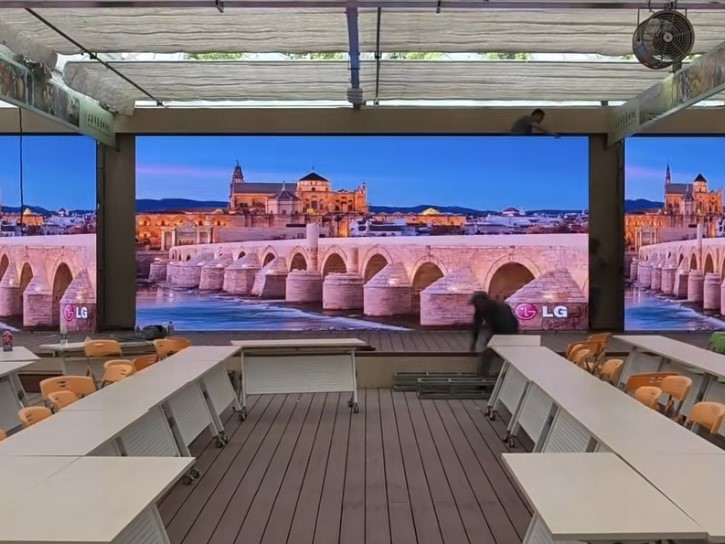
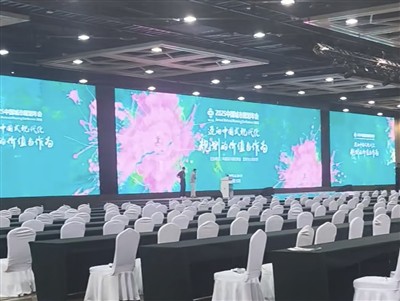
LCD, DLP, and PDP plasma video wall displays each have their own advantages and limitations in terms of technical characteristics and industry applications. A detailed analysis follows:
I. Technical Characteristics Comparison
LCD Video Wall Display
Advantages:
Display Performance: High definition, high brightness (up to 1800 cd/m²), high color saturation, supports flexible splicing combinations (maximum unit size 60 inches).
Physical Characteristics: Small size, light weight, easy installation (supports wall mounting and recessed installation), small space occupation.
Maintenance and Cost: Long lifespan (typically over 60,000 hours), low maintenance cost, low power consumption, low heat generation.
Limitations:
Seam Size: Although reduced from 1-2 cm to 5.3 mm, truly seamless splicing is still not achieved.
Environmental Adaptability: Relies on anti-glare technology for high-brightness outdoor display, but its adaptability to extreme environments is weaker than DLP.
DLP Rear Projection Video Wall
Advantages:
Display Technology: Utilizes DMD digital micromirror devices, supporting fully digital signal processing. Bezel width can be controlled below 0.5 mm, resulting in high image integrity.
Static Display: Suitable for displaying static images for extended periods (e.g., surveillance footage), with no risk of screen burn-in.
Technological Iteration: Mature LED light source technology solves consumable and maintenance issues; laser-LED hybrid light source further extends lifespan.
Limitations:
Physical Defects: Poor color and brightness uniformity, high power consumption, and large space occupation (requires multi-layer stacking installation).
Installation Complexity: Floor-standing installation requires a professional team; outdoor applications require additional protection.
PPD Plasma Video Wall
Advantages:
Seamless Display: Bezel width can be controlled within 1 mm, resulting in strong image uniformity.
Dynamic Response: Self-emissive pixels have a response speed of 0.001ms, suitable for fast-moving images (e.g., live sports broadcasts).
Environmental Adaptability: Ultra-thin body and uniform light emission, adaptable to various indoor environments.
Limitations:
Screen burn-in: Prolonged display of static images can leave ghosting.
Weak supply chain: Insufficient support from upstream panel manufacturers; limited scale of splicing manufacturers.
LCD Video Wall
Core Areas:
Security Monitoring: Significant advantages in high definition and low cost; the security industry grew from $6 billion to $13 billion between 2010 and 2014, directly driving demand.
Commercial Display: Digital signage, advertising media, and exhibition centers rely on its flexible splicing and low maintenance costs.
Enterprise and Education: Used for multi-screen interaction and data visualization in conference rooms and classrooms.
Typical Cases:
Smart city command centers use 46-60 inch unit combinations to achieve real-time monitoring of multiple signals.
Retail stores use embedded installations to display promotional information, enhancing customer experience.
DLP Rear Projection Video Wall
Core Areas:
High-end Command and Control: Traffic dispatching, financial transactions, and government emergency response rely on its seamless display and static image stability.
Energy and Military Industries: Industrial environments requiring long-term operation, such as power monitoring and coal mine safety.
Typical Cases:
The coal industry uses LED-lit DLP video walls for 24/7 monitoring with a lifespan exceeding 100,000 hours.
Military command centers utilize 0.5mm bezel technology to ensure the integrity of tactical maps.
PPD Plasma Video Walls
Core Areas:
Public Information Dissemination: Dynamic display of flight/train schedules at airports and train stations, requiring rapid response and seamless visuals.
Conference and Academic Scenarios: Displaying high-definition videos and data charts in remote conferences and academic seminars.
Typical Cases:
Large-scale exhibitions use PDP video walls to play promotional videos, achieving an immersive experience with a 1mm bezel.
Corporate seminar rooms utilize ultra-thin designs to save space and enhance visual effects.
III. Technological Development Trends
DLP Rear Projection Video Walls:
LED Light Source Popularization: Solving the problem of high consumable costs; market share is expected to stabilize above 40% for the next 3 years.
Laser-LED hybrid light source: Further improves brightness uniformity and lifespan, expanding into the high-end market.
LCD splicing:
Larger size: 55-60 inch unit costs are decreasing, potentially replacing some DLP industrial applications in the future.
Bezel reduction: Through optical bonding technology, the goal is to compress the bezel to within 3mm.
Plasma splicing (PPD):
Anti-burn-in technology: Extends static display lifespan through pixel shift algorithms, but supply chain shortcomings remain to be addressed.
Niche market positioning: Focuses on scenarios with extremely high requirements for seamless display and dynamic response (such as live sports broadcasts).
IV. Summary
LCD: Dominates the commercial and security markets with its cost-effectiveness and flexibility, and will penetrate the industrial sector in the future.
DLP: Consolidates its position in the high-end command and control field with its advantages in seamless display and static images.
PPD: Gradually marginalized due to technological limitations, but still irreplaceable in specific public information scenarios.
With the advancement of "smart cities" and "social informatization," the market size of large-screen splicing is expected to exceed 10 billion yuan. Technological competition will revolve around splicing seams, lifespan, and cost, while industry application scenarios will continue to expand.