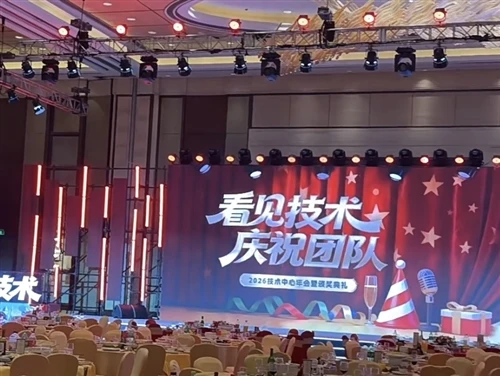
In today's era of digital transformation sweeping across all industries, the conference room, as the core venue for corporate decision-making, creative brainstorming, and strategic deployment, has seen its intelligent hardware upgrade become a crucial aspect of improving organizational efficiency. Among these upgrades, conference room LED large screens, with their superior display performance and flexible integration capabilities, are evolving from traditional display tools into intelligent hubs driving efficient collaboration. This article will delve into the technical advantages of conference room LED large screens, key selection considerations, and how they are reshaping the modern meeting experience.
Technological Evolution and Core Advantages
Traditional projectors struggle to meet the demands of high-end conference rooms in terms of brightness, contrast, and environmental adaptability. LED conference large screens, especially those using small-pitch LED technology, have achieved a revolutionary breakthrough. Their pixel pitch is continuously shrinking, allowing for a seamless, high-definition visual experience even at close viewing distances. The core advantages include:
Superior Image Quality and High Environmental Adaptability: LED screens feature high brightness, high contrast, and a wide color gamut. Even in bright ambient light, the image remains clear and vibrant, completely eliminating the need to dim the lights, a common drawback of traditional projectors.
Seamless Splicing and Flexible Sizing: Modular design allows for customizable screen sizes, achieving truly seamless splicing and avoiding the seam issues of LCD splicing screens. This provides a complete and immersive viewing experience when displaying complex data charts, high-definition videos, or multiple signals.
Stable, Durable, and Intelligent Integration: LED components have a long lifespan and high stability, resulting in relatively low maintenance costs. Modern intelligent LED displays can easily integrate with video conferencing systems, wireless screen mirroring devices, and central control systems, enabling one-touch operation and management.
Key Considerations for Selection and Deployment
Deploying a suitable conference room LED display is not simply about chasing parameters, but requires systematic planning:
Space and Viewing Distance Analysis: The optimal screen size and pixel pitch (P value) should be determined based on the size of the conference room and the main viewing distance. Excessively high resolution is not perceptible at long distances and only increases costs.
Core Functionality Positioning: Clearly define the main application scenarios: daily local meetings, remote video collaboration, or a combination of both, including brand display. This determines the performance requirements of the necessary audio, video codecs, and collaboration software.
System Integration and Control Experience: An excellent display solution should offer convenient control. Consider whether integration with existing office systems (such as calendar scheduling and email systems) is necessary to enable intelligent functions such as automatic meeting scheduling and information dissemination.
Service and Sustainability: Choosing a supplier with reliable technical capabilities and comprehensive after-sales service is crucial to ensure the long-term stable operation of the system and future upgrade and expansion possibilities.
Reshaping the Smart Meeting Experience
When technology is applied appropriately, large LED screens in meeting rooms become a catalyst for increased productivity. They support simultaneous display of multiple signal sources, facilitating comparative analysis; high-definition video conferencing allows remote participants to feel as if they are present in person, promoting seamless communication; and the addition of touch interaction features transforms presentations from "one-way broadcasting" to "two-way interaction," greatly stimulating team creativity.