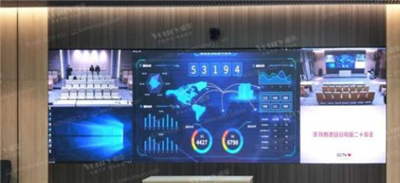
LED full-color screens can display millions of colors, primarily relying on the "additive color mixing" principle of the RGB three-primary-color system. By controlling the brightness and adjusting the mixing ratio of red, green, and blue LED beads, almost all colors of the visible spectrum can be displayed. The specific reasons are as follows:
I. RGB three primary colors are the foundation of color. Each pixel of an LED full-color screen is composed of red, green, and blue LED beads; these three colors are called the "RGB three primary colors."
Red LEDs: Wavelength 620-750 nanometers, emits bright and striking red light, such as the color of a ripe apple or a red lantern.
Green LEDs: Wavelength 495-570 nanometers, emits fresh and clear green light, such as the vibrant green of spring leaves or a grassland.
Blue LEDs: Wavelength 450-495 nanometers, emits pure blue light, such as the refreshing blue hue of a clear sky or a deep ocean.
II. Achieving Color Variation Through Brightness and Mixing Ratios
The core of LED full-color screen color display lies in adjusting the brightness and mixing ratio of the three primary colors, specifically:
Pair Mixing:
Red + Green = Yellow (like a sunflower in sunlight);
Red + Blue = Purple (like the color of a sunset);
Green + Blue = Cyan (like clear lake water).
Tricolor Overlay: When the brightness of red, green, and blue is all adjusted to its highest level, the result is white (like sunlight);
When the brightness of all three colors is reduced, the result gradually transitions to black (like a screen at night).
Fine Adjustment: By adjusting the brightness ratio of each primary color, a range of colors from vibrant rainbow hues to soft gradients can be achieved, covering almost the entire visible spectrum. For example, the skin tone of the host and the true color of the product in a live stream are accurately reproduced through this adjustment.
III. Additive Color Mixing Mode: The "Bright Magic" of Light Overlay
The RGB system uses an additive color mixing mode, which generates new colors by overlaying red, green, and blue light. The more light overlays, the brighter the color. For example:
Red light + Green light = Yellow light (increased brightness); Superposition of all three colors = White light (maximum brightness).
Difference from subtractive color mixing:
Subtractive color mixing is used in printing, painting, and other scenarios (e.g., yellow pigment absorbs blue light and reflects red and green light); Additive color mixing in LED screens directly superimposes light, resulting in more vibrant colors and higher brightness, suitable for dynamic image display.
IV. Application Scenarios with High Color Fidelity
Due to the "perfect coordination" of the RGB three primary colors, LED full-color screens can present vivid and realistic visual effects, and are widely used in:
Live streaming background screens: accurately reproducing the colors of products and the skin tones of the anchors;
Shopping mall advertising screens: displaying highly saturated dynamic advertisements;
Giant concert display walls: presenting detailed stage images and lighting effects.
Summary
LED full-color screens achieve the display of millions of colors through brightness control of the RGB three primary colors and the principle of additive color mixing. Its core logic is: the "brightness and darkness matching" and "proportional mixing" of the three primary color LED beads, combined with the physical characteristics of light superposition, ultimately covers almost the entire range of colors visible to the human eye. This principle not only explains the richness of LED screen colors, but also establishes its core position in the field of display technology.