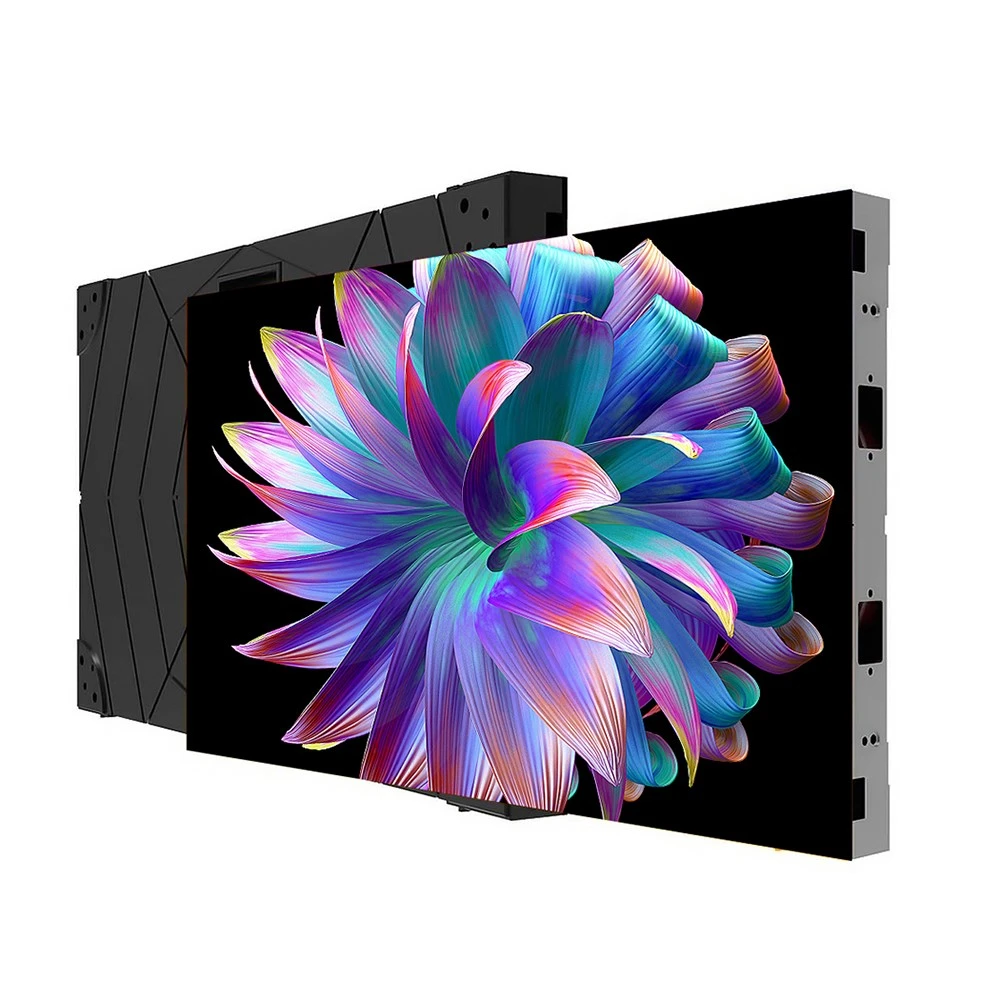
I. P-value Specifications: The smaller the value, the finer the image quality.
In recent years, the LED display screens commonly used indoors are mainly P4 and below specifications (mostly P2.5 and below). The following descriptions all use SMD as an example.
P4/P3: The image has noticeable pixelation in indoor applications, suitable for scenarios where the viewing distance is relatively far from the screen. Currently, it is also widely used in outdoor scenarios.
P2.5/P2: Medium clarity, suitable for most indoor scenarios.
P1.8/P1.5/P1.25: Finer image quality, suitable for large screen viewing at closer distances.
P0.9 (mass-produced)/P0.7/P0.4: Extremely high clarity, generally only used in high-end, high-precision applications. Currently, P0.7 and P0.4 are not yet fully mature for mass production, the price is very expensive, and stability guarantees are limited.
II. Scene Adaptation Rules
The core logic for choosing the P-value is: Where will it be used, how far is the viewing distance from the screen, and what is the budget? The following lists some common application scenarios and their generally suitable pixel pitch:
1. Super large lecture halls, press conferences, advertising walls
Features: Large screen, many people, requiring a large viewing distance from the screen.
Choose P4/P3 for better cost-effectiveness.
2. Medium-sized conference rooms, data centers, exhibition halls
Features: Large screen, a certain distance from the screen, often playing high-definition video or data.
Choose P2.5/P2/P1.8, which provides clear images and is cost-effective, suitable for 4K video, monitoring screens, etc.
3. Small and medium-sized conference rooms, exhibition halls, live broadcast rooms
Features: Smaller screen size or smaller indoor space, close viewing distance, and requirements for detailed image display.
Choose P1.5, P1.25. If the budget is very sufficient, P0.9 can be chosen. The fineness can be seen at close range, choose according to needs.
4. Integrated small screens or high-precision specific uses (remote surgery, ultra-high-definition monitoring display)
Below P0.9
Reason: To match functional requirements, the hardware needs to meet specific standards, and other display products can be compared for optimal selection.
III. Pitfall Avoidance Guide: Don't fall into these three "traps"! 1. Blindly pursuing the "smallest possible P-value"
Misconception: Believing that "the smaller the P-value, the better," neglecting the actual viewing distance.
2. Ignoring size and module compatibility
While LED screens can theoretically be spliced infinitely, they are limited by standard module sizes (e.g., typical modules are 320×160mm), resulting in slight deviations in some sizes. It's advisable to confirm the actual size specifications with the manufacturer in advance.
3. Neglecting future upgrade potential
The smaller the size, the greater the price difference. It's recommended to choose a suitable solution and reserve some budget for future product upgrades. For example, budget can be reserved for future technological iterations (such as 5G, AI, etc.).
Choosing an indoor LED display is not a "numbers game," but a comprehensive consideration based on the scene, distance, and budget. Currently, P4/P3 meets basic display needs, P2.5-P1.8 covers mainstream requirements, and P1.25 and below are dedicated to high-end applications.