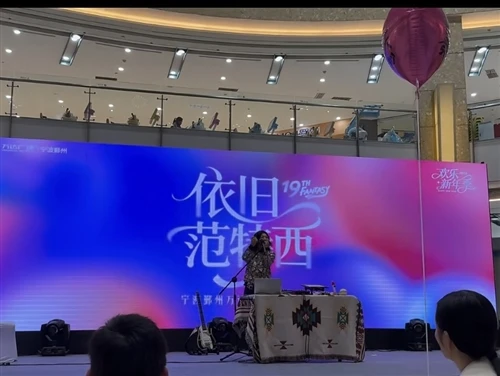
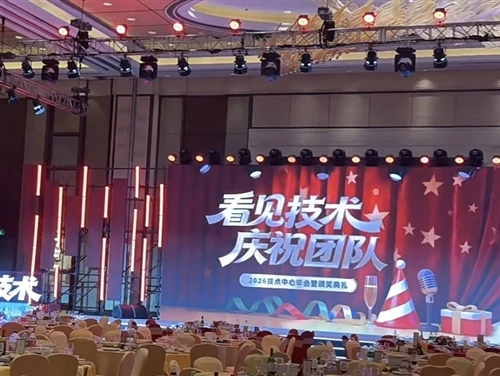
A wireless LED display screen is an LED display device that uses wireless communication technology to achieve real-time information updates and remote management. Compared to traditional wired methods, it has advantages such as flexible deployment, low cost, and convenient management. Here is a detailed introduction:
I. Technology Classification and Communication Methods
Wireless LED displays can be classified according to the technology used, such as WLAN and GPRS (WCDMA). Different technologies are suitable for different scenarios:
WLAN (Wireless Local Area Network): Suitable for locations where wiring is inconvenient or impossible, such as buildings, plants, or streets. It is mostly used for medium-sized full-color displays that need to broadcast information in real time.
Advantages: Only a wireless network card is needed for communication, resulting in low cost and no additional data charges later.
Typical Scenarios: Shopping mall exterior walls, squares, community bulletin boards, etc.
GPRS (General Packet Radio Service): Suitable for mobile LED displays or scenarios requiring centralized management across regions, such as vehicle-mounted screens and taxi roof screens.
Advantages: Wide coverage, supports remote centralized control, suitable for dynamic or distributed deployment.
Typical Scenarios: Taxi advertising screens, logistics vehicle information screens, cross-regional chain store screens, etc.
II. Core Application Scenarios
Fixed Scenarios Where Wiring is Impossible
Requirement: Traditional wired wiring is costly and difficult to install in situations where buildings obstruct the view, streets are complex, or temporary events take place.
Solution: Use WLAN wireless LED displays, connecting to a local area network via a wireless network card to achieve real-time information updates.
Example: LED displays on both sides of Huaihai Road in Shanghai, spaced approximately ten meters apart, are managed uniformly via WLAN, covering the entire street.
Multi-Screen Centralized Management Scenarios
Requirement: Schools, public institutions, government departments, etc., need to uniformly publish and monitor content on dispersed LED screens.
Solution: Build a remote management platform using GPRS or WLAN technology to achieve synchronous or asynchronous control of multiple screens.
Examples: Campus notification screens, government announcement screens, traffic guidance screens, etc.
Mobile Scenarios
Requirement: Vehicle-mounted displays (such as taxi roof screens) need to move with the vehicle and require centralized management.
Solution: Utilizes GPRS communication, updating information in real-time via mobile network and supporting remote control.
Examples: Taxi advertising screens, bus arrival display screens, etc.
III. System Control Types
The system control method of wireless LED displays is closely related to communication technology:
WLAN: Primarily a synchronous control system, where the display content is synchronized with the control terminal in real time, suitable for scenarios with high timeliness requirements (such as live news broadcasts and sports scores).
GPRS: Primarily an asynchronous control system, the display can store content and play it according to preset rules, suitable for scenarios with unstable network signals or requiring low data usage costs (such as advertising screens in remote areas).
IV. Comparison with Traditional LED Displays
Deployment Costs: Traditional LED screens rely on wired connections, resulting in high initial investment (such as cabling and equipment costs) and limited distance.
Wireless LED screens require no cabling, especially WLAN, which only requires a wireless network card, significantly reducing costs.
Management Efficiency: Traditional methods (such as USB/SD card updates) cannot publish information in real time, and labor costs increase with distance and distribution range.
Wireless methods support remote centralized management, reducing manual intervention and improving efficiency.
Flexibility: Traditional methods are limited by physical connections and are difficult to adapt to dynamic or temporary scenarios.
Wireless methods can be deployed quickly, supporting mobile applications (such as in-vehicle screens) and temporary events (such as exhibitions and performances).
V. Precautions
Communication Stability: WLAN methods rely on local area network coverage, while GPRS methods require consideration of mobile network signal strength.
Cost Control: WLAN is suitable for short-distance, high-density deployments (such as campuses and shopping malls), while GPRS is suitable for long-distance, distributed deployments (such as cross-regional advertising screens).
System Compatibility: Choose wireless communication technologies compatible with existing management platforms to avoid future upgrade costs.
Wireless LED displays solve the deployment challenges of traditional wired methods through wireless communication technology, and are widely used in commercial advertising, public information dissemination, traffic guidance, and other fields, becoming an important direction for intelligent displays.