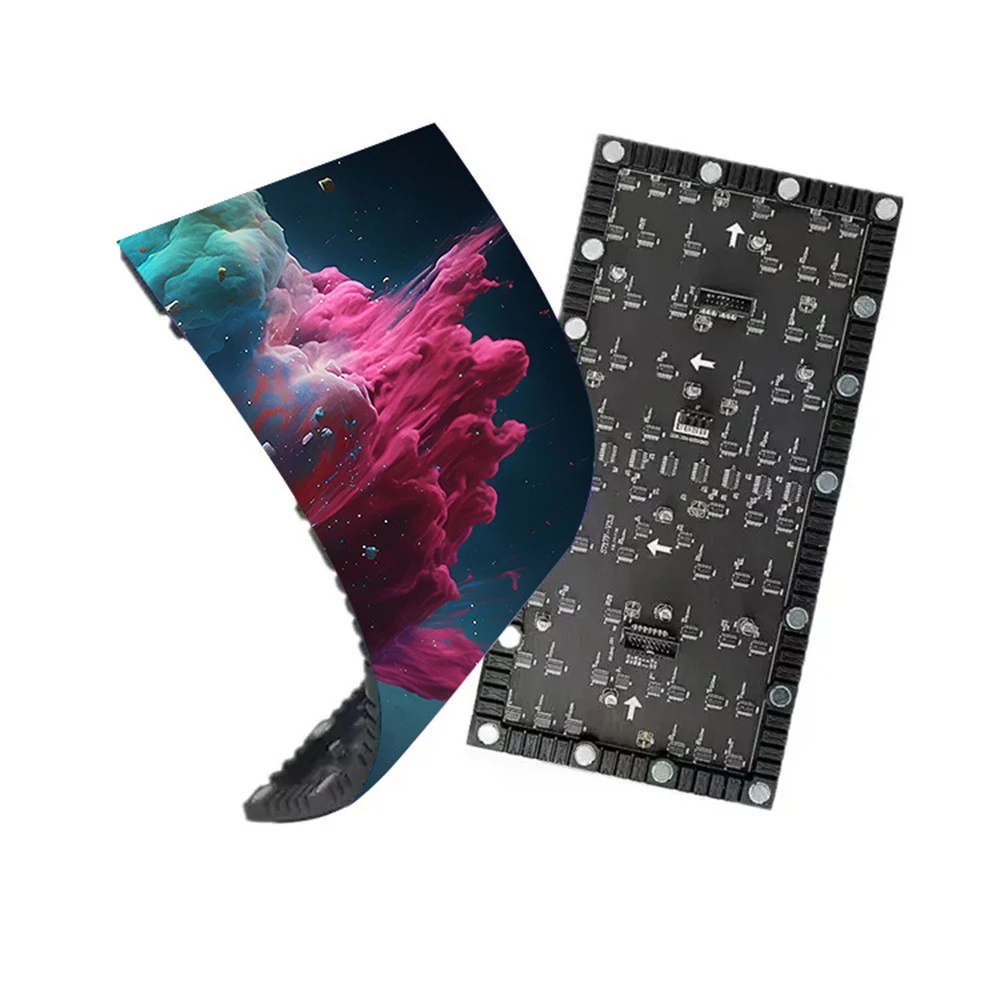
The main differences in visual effects between curved LED screens and regular LED screens are reflected in the following aspects:
Viewing Angle: Due to their curvature design, curved LED screens often offer a wider viewing angle. This is because the curvature of the screen allows the content to be seen from a greater angle; that is, even when viewed from the side, viewers can see more content, rather than just a portion of the screen. In contrast, flat LED screens typically have a narrower viewing angle, requiring viewers to face the screen directly for the best visual experience.
Immersion: Due to their curved design, curved LED screens provide a wraparound viewing experience, enhancing the sense of immersion, especially when watching movies and playing games. Flat LED screens, due to their flat design, offer a relatively weaker sense of immersion.
Visual Fatigue: Some studies suggest that curved LED screens, because their design better conforms to the natural viewing angle of the human eye, may reduce eye fatigue compared to flat LED screens, especially after prolonged use.
Visual Impact: In specific applications such as advertising displays and stage backdrops, curved LED screens, due to their unique visual effects, can generate a strong visual impact and attract more attention.
In general, the main difference between the two in terms of visual effects is that curved LED screens, due to their curved design, can provide a wider viewing angle, a stronger sense of immersion, and a greater visual impact, while flat LED screens are relatively weaker in terms of viewing angle and immersion. However, flat LED screens may be more suitable for some standardized applications (such as video walls and information displays).