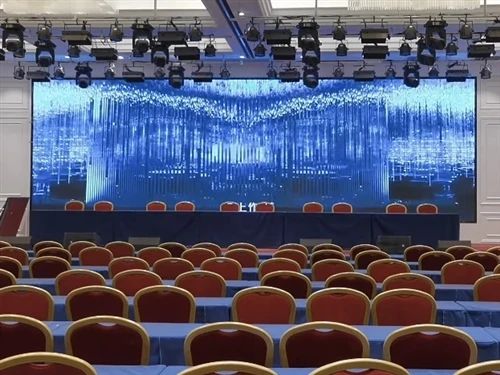
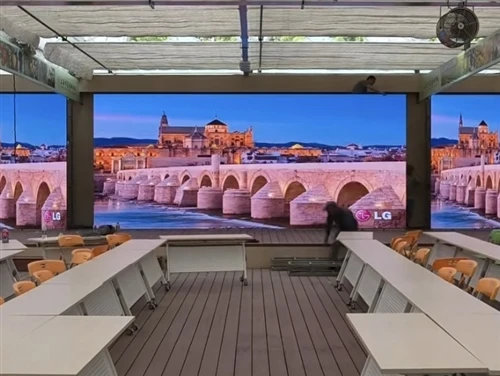
The grayscale level of a full-color LED display screen refers to the number of brightness levels it can display, and is an important indicator of the screen's color performance capability.
Definition and Function of Grayscale Level: Grayscale level reflects the number of brightness levels that a display screen can distinguish from the darkest (black) to the brightest (white). The higher the grayscale level, the smoother the brightness transition, the richer the color levels, and the stronger the image detail. For example, a low grayscale level display screen may show color banding or breaks when displaying gradient images, while a high grayscale level can present a natural and smooth transition effect.
Technical Principle of Grayscale Level: Grayscale level is mainly determined by the number of bits in the system's A/D conversion, and also requires supporting video processing chips, memory, and transmission systems. The higher the number of bits in the A/D conversion, the more brightness levels can be represented. For example:
8-bit system: Provides 256 (2π) grayscale levels, that is, 256 brightness variations from black to white. After combining 256 grayscale levels for each of the three primary colors of RGB, approximately 16.77 million colors (256×256×256) can be displayed. 10-bit system: Provides 1024 (21?) levels of grayscale, and can display approximately 1.07 billion colors (1024×1024×1024) after RGB combination, resulting in more delicate color reproduction.
Grayscale level selection and cost balance: Higher grayscale levels are not always better; both human eye resolution limitations and cost factors must be considered:
Human eye resolution limitations: The human eye has a limited ability to distinguish brightness levels. Excessively high grayscale levels may exceed the range of human perception, resulting in wasted resources.
Cost and cost-effectiveness: Increasing grayscale levels requires upgrading video processing, storage, and transmission, leading to a sharp increase in cost. For example, a 10-bit system costs significantly more than an 8-bit system, but the color improvement may not be noticeable to the average viewer.
Application scenario adaptation:
Consumer/commercial products: Typically use an 8-bit system (256 levels of grayscale), meeting daily display needs and offering high cost-effectiveness.
Broadcast/Professional Grade Products: Employ a 10-bit system (1024 grayscale levels), suitable for film and television production, high-end advertising, and other scenarios with extremely high color accuracy requirements.
Impact of Grayscale Level on Display Effect
Color Richness: The higher the grayscale level, the more exponentially the number of colors that can be combined using the RGB primary colors, resulting in a more realistic image.
Detail Representation: High grayscale levels reduce brightness banding, making details such as shadows and gradients clearer.
Dynamic Range: Grayscale level and contrast ratio together determine the dynamic range of the display screen. High grayscale levels help to present deeper blacks and brighter whites.
Summary: The grayscale level of a full-color LED display screen is a core indicator of the number of brightness levels, determined by the number of bits in the A/D conversion, directly affecting color performance and image detail. When choosing a system, a balance must be struck between the limits of human visual perception and cost. Consumer scenarios typically use an 8-bit system, while professional scenarios can choose a 10-bit system for more accurate color reproduction.