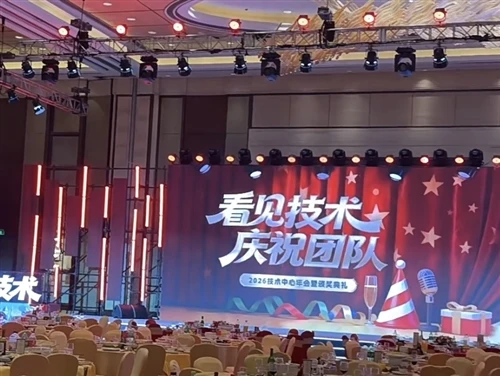
This year, the topic of "transparent display" has frequently dominated headlines. Transparent screens, evolving towards lighter, more transparent, and thinner designs, have spawned numerous innovative products, leading the way in smart displays. Outdoor installations, indoor large screens, commercial advertising, smart exhibitions, automotive displays, stage decorations… the application of transparent displays is rapidly becoming widespread.
As representative products of transparent displays, film-coated screens, crystal-coated screens, and holographic screens are highly favored in the market. What are the differences between them? Today, we'll explain.
Concepts and Principles:
LED Film-Coated Screens: LED film-coated screens use specific bare chips, mounting LEDs onto a high-transparency PCB board. Through a unique capping process, the display module is integrated into a high-transparency optical lens-like substrate capable of emitting light. It can be slightly bent, but its flexibility is somewhat limited.
LED Crystal-Coated Screens: LED crystal-coated screens, also known as jelly screens. Utilizing LED chip bare-chip implantation technology, the LED board uses a transparent crystalline film with a transparent mesh circuit etched on its surface. After components are attached, a vacuum sealing process is applied, resulting in a flexible and transparent display effect.
LED Holographic Screen
A holographic screen, also known as a holographic transparent cold screen, LED holographic transparent screen, or invisible screen, is a new type of display technology that combines LED technology and optical principles. It uses an array of LED chips and precise algorithms and control technology to achieve a three-dimensional display effect. The screen is grid-like and uses specially designed transparent LED display elements, allowing light to penetrate the display without significantly obstructing the background.
Differences between Film-Modified Screens, Crystal-Modified Screens, and Holographic Screens
Display Effect
The display effect of a film-modified screen mainly depends on its resolution and brightness. High-resolution and high-brightness film-modified screens can present clearer and brighter images.
Crystal-Modified screens, through the application of laser etching circuitry, can better control linewidth, ensuring uniform impedance and brightness of each LED chip, achieving a uniform brightness effect for the displayed content.
Compared to traditional 2D displays, holographic screens can present three-dimensional and realistic image effects. When playing 3D or holographic videos, they create a strong three-dimensional effect, making the displayed images more vivid and impactful.
Regarding transparency: While film-coated screens also have high transparency, it is slightly lower than crystal-coated screens and holographic screens, typically ranging from 70% to 95%.
Crystal-coated screens have extremely high transparency, as clear as crystal, reaching up to 95%. When mounted on a glass composite, they can almost achieve an invisible screen effect.
Holographic screens have a transparency of ≥80% when viewed from both sides, and a light transmittance of ≥90%. When displaying 3D images, holographic screens maintain the clarity and transparency of the background, enhancing the viewer's immersive experience.
Common models: Common film-coated screen models include P6.5, P10, P16, and P20.
Common crystal-coated screen models include P6.5, P4-8, P8, P10, P16, and P20.
Common holographic screen models include P0.9, P1.25, P2, P3.91, and P6.25.
Regarding flexibility and adaptability: Laminated LED screens offer some flexibility and can be bent to a certain extent, but the degree of bending is limited.
Crystal film LED screens use flexible substrates, making them thinner and lighter compared to other transparent screens. Crystal film LED screens can be rolled up and bent like rolls, facilitating transportation and carrying.
Holographic screens also offer some flexibility, allowing for seamless curved surface mounting, but the degree of bending is limited; they cannot be rolled up like crystal film LED screens.
Regarding weight: Laminated LED screens weigh approximately 2-4 kg/m².
Crystal film LED screens and holographic screens are relatively lighter than crystal film LED screens, typically less than 2 kg/m².
Application scenarios: Laminated LED screens are used in outdoor glass complexes, shop windows, brand stores, large shopping malls, glass walkways, and other scenarios.
Crystal film LED screens offer great flexibility and are widely used in outdoor advertising, interior decoration, and building curtain walls.
LED holographic screens can present a 3D effect and are widely used in commercial advertising, exhibitions, concerts, sports events and other fields.