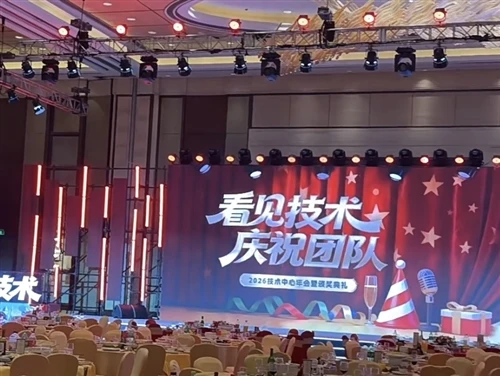
Many people are starting to consider using LED displays to capture advertising revenue from traditional television media, attracting considerable attention due to the increasing advertising profits. Many are also considering the acceptance of full-color LED displays. Let's look at the acceptance standards for outdoor LED displays.
I. Color Reproduction Accuracy: Color reproduction refers to the display's ability to accurately reproduce colors. The colors displayed on the screen must be highly consistent with the colors of the playback source to ensure image realism.
II. Presence of Color Blocks: Color blocks refer to noticeable color differences between adjacent modules. Color transitions occur on a module-by-module basis. This is mainly caused by a poor control system, low grayscale levels, and low scanning frequency.
III. Presence of Mosaic and Dead Pixel Phenomena: Mosaic refers to small, constantly lit or dark squares on the display screen, indicating module failure. This is primarily caused by substandard connectors used in the display. Dead pixels refer to single, constantly lit or dark pixels on the LED display screen. The number of dead pixels is mainly determined by the quality of the LED chip.
IV. Flatness: The surface flatness of the LED display screen should be within ±1mm to ensure that the displayed image is not distorted. Local bumps or depressions will cause blind spots in the viewing angle. The flatness is mainly determined by the manufacturing process.
V. Brightness and Viewing Angle: The brightness of indoor full-color screens should be above 800 cd/m², and the brightness of outdoor full-color screens should be above 1500 cd/m² to ensure the normal operation of the display screen. Otherwise, the displayed image will be unclear due to insufficient brightness. The brightness is mainly determined by the quality of the LED chips. The viewing angle directly determines the audience size of the display screen, so the larger the better. The viewing angle is mainly determined by the packaging method of the LED chips.
VI. White Balance Effect: White balance effect is one of the most important indicators of a display screen. In color science, pure white is displayed when the ratio of the three primary colors of red, green, and blue is 1:4.6:0.16. If the actual ratio deviates even slightly, white balance will be off. Generally, pay attention to whether the white has a bluish or yellowish-green tint. The quality of white balance is mainly determined by the display's control system, while the color reproduction capability of the LED chip also has an impact.