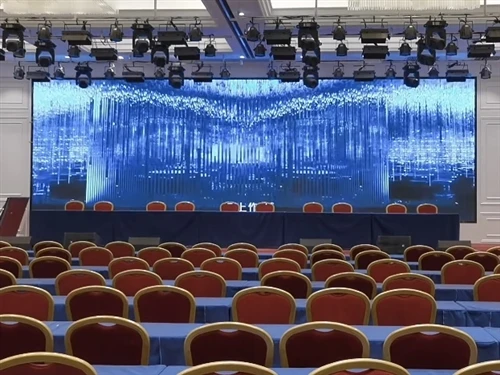
The impact of PWM technology (especially S-PWM technology) on LED electronic displays is mainly reflected in increasing refresh rate, optimizing grayscale levels, improving shooting effects, and enhancing stability, significantly improving display quality and user experience.
Increasing Refresh Rate Eliminates Flicker and Ripples: Traditional PWM technology achieves brightness adjustment by periodically switching LEDs on and off. However, when the refresh rate is insufficient (e.g., below 3000Hz), the human eye or camera may detect flicker or horizontal stripes (ripples). S-PWM technology increases the visual refresh rate by up to 64 times by distributing the conduction time of a single frame into multiple short pulses. For example, a refresh rate of over 4800Hz can be achieved using a 5MHz low-order clock, far exceeding the limit of human visual perception (60Hz) and the requirements of high-speed photography (above 1000Hz). This improvement completely eliminates flicker and black scan lines caused by low refresh rates, making dynamic images more stable.
Optimizing Grayscale Levels Enhances Color Performance: Grayscale level refers to the transition levels of a color from its darkest to its brightest. If the grayscale of a traditional LED display is insufficient (e.g., below 14bit), problems such as color block distribution or uneven gradients may occur. S-PWM technology precisely controls the duty cycle of each short pulse, maintaining the original On/Off ratio while splitting the single-frame count into multiple parts, thus supporting higher grayscale levels (such as 16-bit, i.e., 65,536 colors). Even at high shutter speeds (such as 1/2000 second), it avoids color banding, ensuring natural color transitions and meeting the needs of high-definition video playback or close-up photography.
Improving shooting effects and adapting to high-speed shutters: Traditional LED displays are prone to horizontal black scan lines or color banding when shooting at high shutter speeds due to the mismatch between refresh rate and shutter speed. S-PWM technology, by increasing the visual refresh rate to over 4800Hz, ensures that each frame is captured completely, even at a shutter speed of 1/8000 second, avoiding scan line interference. For example, a high-quality LED driver chip combined with S-PWM technology can achieve a "no black scan line" shooting effect at a refresh rate of 3840Hz and 16-bit grayscale, significantly better than traditional switching driver chips.