Full-color LED Display Screens vs. Monochrome Screens: Differences and Application Scenarios Analysis
Full-color LED Display Screens vs. Monochrome Screens: Differences and Application Scenarios Analysis
I. Technical Principles and Display Effects
Full-color LED display screen
Technical principle: Full-color LED displays are composed of red, green, and blue LED light beads. By precisely controlling the brightness and proportion of these three color light beads, over 16 million colors can be mixed, achieving full-color display.
Display effect:
Rich in color: It can display high-definition pictures, dynamic videos and complex color patterns with vivid colors.
High contrast: It can better present the difference between dark and light colors, making the image vivid.
High refresh rate: Usually between 60Hz and 240Hz, it reduces screen flickering and trailing, making it suitable for playing videos and animations.
Monochrome LED display screen
Technical principle: Monochrome LED display screens only use LED beads of one color, with common colors including red, yellow and white. Information is displayed by controlling the brightness of the monochrome LED beads.
Display effect:
Monochromatic: Unable to display multiple colors, but a single color has unique advantages in certain application scenarios.
Low cost: Low manufacturing cost, simple circuit design and driving technology.
Lower power consumption: There is no need to control multiple color LEDs simultaneously, resulting in lower power consumption.
II. Comparison of Application Scenarios
Application scenarios of full-color LED display screens
Advertising and promotion:
Outdoor advertising: such as outdoor billboards of large shopping malls, displaying high-definition pictures and dynamic videos to attract consumers' attention.
Indoor advertising: Display high-definition advertising content in indoor places such as shopping malls and supermarkets to enhance advertising effectiveness.
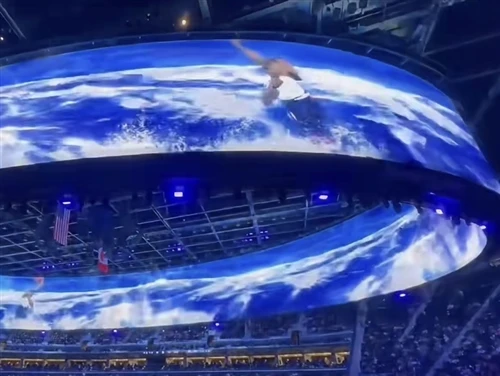
Stage performances: Delivering stunning visual effects to the audience, such as background videos and lighting effects in concerts and music festivals.
Meeting presentation: Clearly display high-definition PPTs, video conference content and real-time data to enhance meeting efficiency and quality.
Sports events: Live broadcast the game footage, score information and advertising content to ensure that the audience can clearly see the information.
Application scenarios of monochrome LED display screens
Emergency Information Notice:
Public safety: Red single-color screens at airports and railway stations, which quickly display emergency notifications and safety tips.
Medical facilities: Display emergency notifications, ward information, and medical alerts to ensure rapid information dissemination.
Traffic instructions:
Traffic signal lights: Use single-color LED displays to show the three colors of "red", "yellow" and "green" to ensure smooth traffic flow.
Traffic condition display screen: It shows traffic information at the entrance of the expressway to help drivers choose the appropriate route.
Information Release:
Schools, hospitals and factories: Publish simple text messages, such as notices, announcements and work arrangements.
Outdoor Advertising (Special Scenarios):
In areas with weak lighting such as tunnel entrances or at night, use high-brightness white LED beads to ensure that the advertising information is clearly visible.