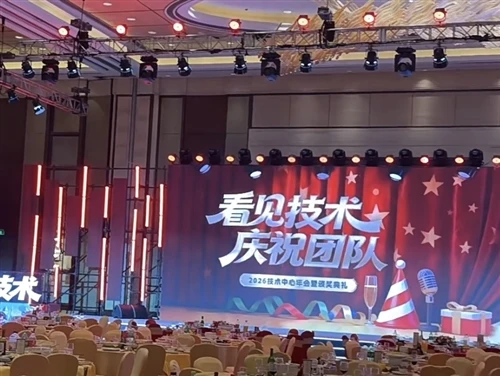
I. Core Parameters: Brightness, Contrast, and Refresh Rate
(1) Brightness and Uniformity
The brightness of an LED rental screen directly affects its display performance in outdoor or bright light environments. High-quality screens typically have a brightness of ≥5000 cd/m² (outdoor screens) or ≥1500 cd/m² (indoor screens), and the brightness uniformity should be ≥95% to avoid excessively bright or dark areas.
(2) Contrast Ratio
A high contrast ratio (e.g., ≥5000:1) enhances image depth and detail, especially when displaying dark scenes. High-quality LED rental screens can clearly display details, while low-quality screens may appear hazy.
(3) Refresh Rate
Screens with a refresh rate of ≥3840Hz can eliminate flickering during filming, making them suitable for live broadcasts or high-speed dynamic images. Low-refresh-rate LED rental screens are prone to showing ripple patterns under the camera.
II. Structural Design: Stability and Durability
(1) Cabinet Material and Design
High-quality LED rental screens use die-cast aluminum or carbon fiber cabinets, which are lightweight and have good heat dissipation, reducing the risk of deformation during transportation. The cabinets should also have a quick-lock design for easy and fast assembly on-site.
(2) Protection Rating
Outdoor LED rental screens need to meet IP65 or higher protection ratings (dustproof and waterproof) to prevent short circuits caused by rain or dust. While indoor screens don't require high waterproofing, they should have moisture-proof and anti-static functions.
(3) Cooling System
An efficient cooling design (such as fans + heat sinks) extends the lifespan of the LED chips. Low-quality screens, due to insufficient cooling, may experience rapid LED chip degradation, leading to color shifts or dead pixels in the LED rental screen.
III. Display Effect: Color Reproduction and Consistency
(1) Color Gamut Coverage
High-quality LED rental screens should cover 90% or more of the NTSC color gamut or the DCI-P3 standard, accurately reproducing brand colors (such as red logos) and avoiding color distortion.
(2) Grayscale Levels
Screens with grayscale levels of ≥16 bits can display more delicate gradient effects, especially when displaying night scenes or skin tones. Low-quality screens may show banding or color blocks. (3) Viewing Angle and Brightness Attenuation
Screens with a horizontal/vertical viewing angle of ≥160° ensure clear viewing for audiences from the sides. Furthermore, high-quality LED rental screens should have a brightness attenuation of ≤30% at a 45° viewing angle, while inferior screens may experience attenuation exceeding 50%.
IV. Suitability for Usage Scenarios
(1) Installation Flexibility
High-quality LED rental screens support curved and irregular splicing, and the cabinet thickness is ≤80mm, making them easy to conceal within stage structures. Inferior screens, due to their bulky design, may limit creative presentation.
(2) Ease of Maintenance
Modular design (such as magnetic LED panels) reduces maintenance difficulty, while integrated LED rental screens require complete replacement, increasing long-term costs.
(3) Compatibility and Expandability
Screens that support multiple signal inputs (HDMI, DVI, SDI) and control systems (such as Nova, Linsn) allow LED rental screens to adapt to different event needs, avoiding delays caused by incompatible interfaces.