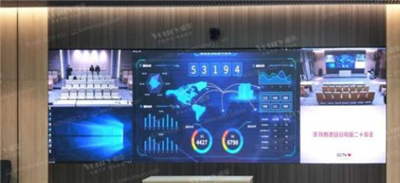
If we compare LED beads to thousands of obedient soldiers, then the driver IC is the "commander" strategizing behind the scenes. Its responsibility is to precisely control the brightness and color of each bead. The reliability of this commander directly affects the stability and quality of the entire display. Therefore, reliability testing of the driver IC is crucial.
Driver IC reliability testing covers all aspects, from electrical performance to environmental adaptability. First, it tests the accuracy of its basic electrical parameters. For example, the accuracy of the output current is paramount; insufficient accuracy will result in persistent color patches and uneven brightness on the screen. Testers use high-precision instruments to measure whether the IC's output current matches the design value at different grayscale levels.
Second, the environmental adaptability test is equally rigorous. The driver IC is placed in a high and low temperature test chamber, operating within an extreme temperature range from -40°C to over 100°C to verify its temperature coefficient-that is, the stability of its output characteristics as temperature changes. A good "commander" should remain calm and issue precise commands regardless of extreme temperatures.
Furthermore, driver ICs must withstand various external interferences and attacks. Electrostatic discharge (ESD) immunity testing simulates static electricity generated when a person or device comes into contact with the IC, checking if the IC can withstand instantaneous high voltage without being damaged. Electromagnetic compatibility (EMC) testing checks whether the IC radiates excessive electromagnetic waves during operation, interfering with other devices, while also ensuring it can resist a certain level of external electromagnetic interference. Only driver ICs that pass these comprehensive reliability tests can be considered qualified "commanders," leading millions of LEDs to present a magnificent visual feast in complex environments.