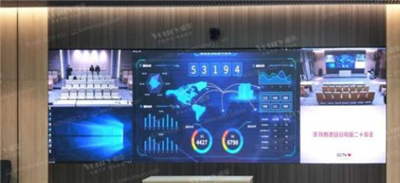
An LED display control card, also known as an LED asynchronous control card system or LED strip screen control card, is the core component of an LED graphic display screen. It is responsible for receiving screen display information from the computer's serial port, storing it in the frame memory, and then generating the serial display data and scan control timing required by the LED display screen according to a partitioned driving method. The following are detailed facts about LED display control cards:
I. Basic Functions of an LED Display Control Card
Information Reception and Storage: The control card receives screen display information from the computer's serial port and stores it in the frame memory.
Information Display: According to the preset display order and method, the control card displays and plays the stored information screen by screen, in a loop.
Drive Control: The control card generates the serial display data and scan control timing required by the LED display screen to drive the LED display screen to work normally.
II. Types of LED Display Control Cards
Synchronous LED Display Control Card
Main Uses: Real-time display of video, graphics, text, notifications, etc., mainly used for indoor or outdoor full-color large-screen displays.
Operating Mode: The synchronous LED control card system operates essentially the same as a computer monitor, updating point-to-point in real-time with the image on the computer monitor at a rate of at least 60 frames per second.
Features: Real-time performance, rich expressiveness, relatively complex operation, high price.
Composition: A typical synchronous LED display control card system consists of a sending card, a receiving card, and a DVI graphics card.
Sending Card: Displays the content to be displayed on the VGA monitor according to the specific format and playback order required by the LED display, and transmits the image displayed on the VGA monitor to the control board via the capture card.
Receiving Card: Receives the video signals (control signals and data signals) transmitted from the sending card, performs bit-plane separation on the video signal, stores it in external buffers, then reads it out in sections and transmits it to the display driver.
Asynchronous LED Display Control Card
Also known as: Offline LED control card or offline card.
Main Uses: Displays various text, symbols, graphics, or animations.
Features: Simple operation, low price, wide range of applications.
Classification: Simple asynchronous LED control card: Can only display digital clocks, text, and special characters.
Asynchronous LED Control Card with Graphics and Text: Besides its basic control system functions, its biggest feature is the ability to control the display screen content in designated areas. It supports analog clock displays, countdowns, images, tables, and animations, and includes functions such as timed power on/off, temperature control, and humidity control.
III. Applications of LED Display Control Cards
LED displays are widely used in various industries due to their flexible control, ease of operation, and low cost. Examples include commercial advertising, information dissemination, traffic signs, and stage backdrops. As a core component of LED displays, the stability and functionality of the control card directly affect the display's performance and user experience.
IV. Considerations for Selecting LED Display Control Cards
Choose the type based on needs: Select a suitable synchronous or asynchronous control card based on the actual application scenario and requirements.
Consider compatibility and scalability: Ensure the control card is compatible with the LED display and consider future expansion needs.
Focus on performance and stability: Choose a stable and reliable control card to ensure the long-term stable operation of the LED display.
Consider after-sales service: Choose a supplier with good after-sales service so that problems encountered during use can be resolved promptly.
In conclusion, the LED display control card is a crucial component of an LED display screen. Its performance stability and functional richness are vital to the display's effectiveness and user experience. When selecting and using it, factors such as actual needs, compatibility, expandability, performance, and after-sales service must be fully considered.