When selecting display devices for commercial, office, and home scenarios, LCD vs LED display comparison is the most common reference standard for users. Both are mainstream flat-panel display technologies, but they differ greatly in imaging principle, performance and applicability. This article systematically compares indoor commercial LED display, high refresh rate LED screen, low power consumption LCD monitor, seamless splicing LED display and high color accuracy LCD display, analyzing their advantages, core features, standard usage scenarios and operational precautions, providing professional and practical selection guidance.
1. Core Advantages of LCD vs LED Display
1.1 Unique Advantages of LED Display
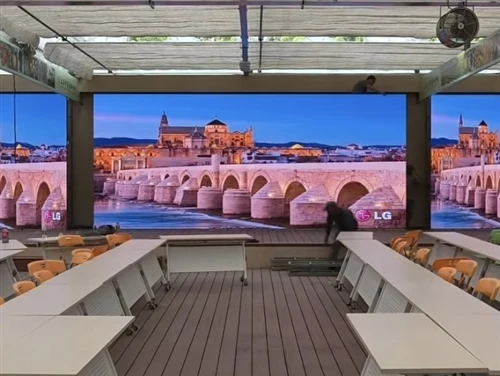
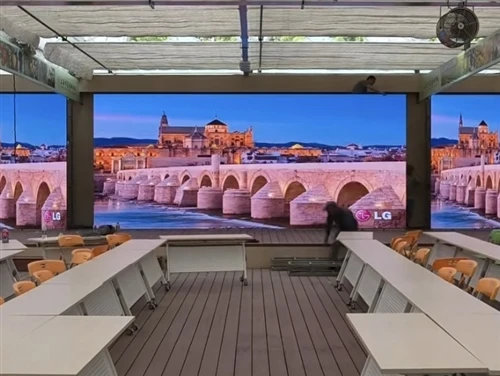
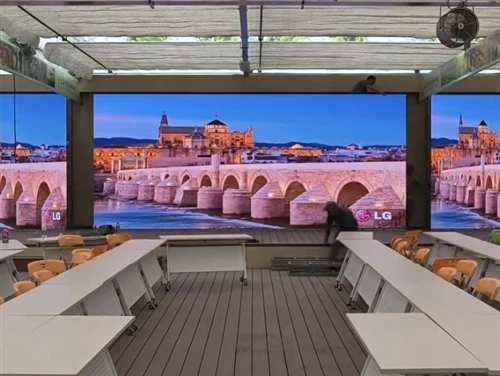
The seamless splicing LED display is a core advantage of LED technology, solving the bezel gap problem that plagues traditional LCD screens. It supports unlimited modular splicing to form ultra-large integrated display screens, which is irreplaceable for large-area exhibition and command center scenarios. Meanwhile, the high refresh rate LED screen effectively eliminates screen flicker and moiré, delivering smoother dynamic video playback and camera shooting effects. In addition, LED displays feature ultra-high brightness and strong environmental adaptability, adapting to both indoor high-definition display and outdoor strong-light viewing environments.
1.2 Unique Advantages of LCD Display
High color accuracy LCD display boasts mature liquid crystal imaging technology, with stable color calibration and ultra-low color deviation, which is more suitable for professional scenarios such as graphic design, video editing and medical display. The low power consumption LCD monitor has outstanding energy-saving performance in small-size static display scenarios, with lower unit cost and more stable static picture display. Moreover, LCD screens have no pixel burn-in risk in long-term static display, with excellent daily use stability.
2. Core Technical Features of LCD vs LED Display (With Terminator Annotations)
2.1 Working Principle Differences
LED Display: A self-luminous display device (Annotation: Each pixel bead actively emits light independently without relying on auxiliary backlight). It controls brightness and color through the switch of LED lamp beads, with fast response speed and high contrast.
LCD Display: A backlight-type display device (Annotation: Relies on fixed backlight modules, adjusts light transmission through liquid crystal molecules to form pictures). It belongs to passive imaging, with gentle light and soft visual effect.
2.2 Display Performance Features
LED displays have ultra-high contrast ratio and wide viewing angle, with no color deviation at 160° horizontal and vertical viewing angles. The adjustable brightness range is extremely wide, meeting the demand of indoor commercial LED display for high-brightness anti-reflection viewing. LCD displays have delicate pixel filling and uniform screen color, with more accurate color restoration for static pictures, and no dazzling high light leakage.
2.3 Structural & Durability Features
LED adopts modular assembly structure, supporting arbitrary size and shape customization, with flexible installation and later maintenance. LCD features an integrated fixed structure, fixed size and no splicing capability, but has stable overall performance and low failure rate in single small and medium-size screens. LED has a longer service life, while LCD has better anti-static and anti-interference performance in indoor static use.
3. Standard Usage Scenarios of LCD vs LED Display
3.1 Applicable Scenarios for LED Display
LED displays are prioritized for large-size, dynamic and high-frequency display scenarios. The seamless splicing and high-brightness features are suitable for shopping mall advertising, smart city command centers, auto shows and outdoor billboards. The high refresh rate design is ideal for live broadcast, conference video display and cultural tourism dynamic light and shadow shows, focusing on large-screen dynamic visual presentation.
3.2 Applicable Scenarios for LCD Display
LCD displays are more suitable for small and medium-size static and professional display scenarios. High color accuracy models are used for design office, studio post-production and professional graphic display. Low power consumption LCD monitors are widely used in home office, desktop display and enterprise daily office monitoring, focusing on stable static display and cost-effective use.
4. Usage & Maintenance Precautions for LCD vs LED Display
4.1 Universal Precautions
Both displays need to avoid long-term exposure to humid, high-temperature and dusty environments to prevent circuit dampness and component aging. It is forbidden to wipe the screen surface with corrosive liquid or hard objects to avoid scratching and coating damage. Frequent startup and shutdown in a short time should be avoided to prevent current impact from damaging internal components.
4.2 Exclusive Precautions for LED Display
LED displays shall not display fixed high-brightness static pictures for a long time, so as to prevent local lamp bead aging and pixel burn-in. Large splicing LED screens need regular inspection of module connection lines to ensure signal stability. Outdoor LED equipment should check waterproof and dustproof structures regularly to adapt to complex outdoor environments.
4.3 Exclusive Precautions for LCD Display
LCD displays are prone to light leakage and screen shadow after long-term high-brightness operation, so brightness should be appropriately reduced during standby. Avoid long-term extrusion of the screen to prevent liquid crystal molecule displacement and screen distortion. Professional calibration is required regularly for high-color-accuracy LCD screens to maintain color restoration performance.
FAQ
Q1: Which is better for indoor office use, LCD or LED display?
A1: Small-size daily office scenarios suit LCD for stable color and low cost; large conference rooms and command centers prefer LED for seamless splicing and wide viewing angle.
Q2: Does high refresh LED display have obvious advantages over LCD?
A2: Yes. High refresh LED avoids flicker and moiré for video shooting and dynamic playback, while LCD has limited refresh rate and is more suitable for static display.
Q3: Which screen is more energy-saving for long-term use?
A3: Small-size static use: low-power LCD is more energy-saving; large-size dynamic playback: energy-optimized LED has lower comprehensive power consumption.