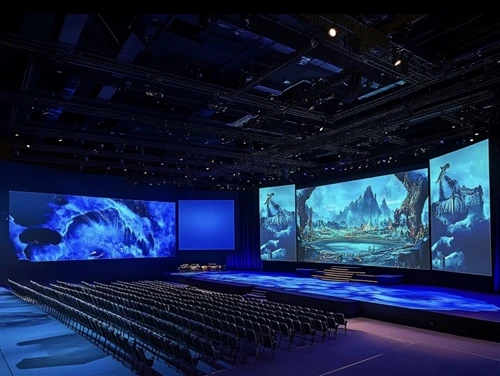
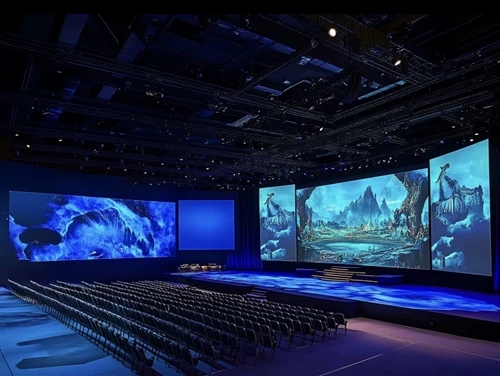
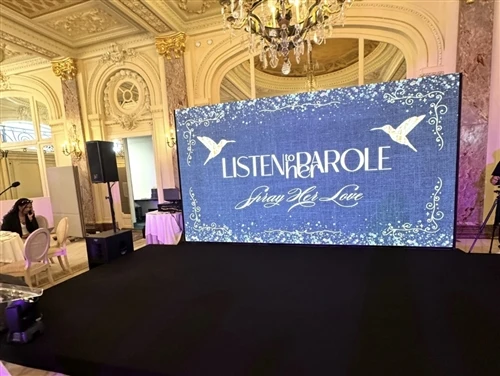
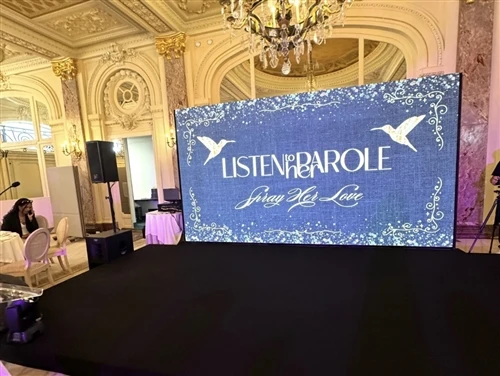
Large LED display displays are now essential visual communication tools in a variety of industries, including corporate boardrooms, retail establishments, stadiums, and smart city infrastructure. Large-format LED displays are in high demand as businesses look for more effective methods to engage audiences. In Q2 2025, the global LED video display market grew 6.2% year over year, led by public spaces, retail, sports, and live events.
This thorough guide explains what huge LED display panels are, where they are most useful, why they perform better than other display technologies, and how to choose and put into practice the best option for your particular requirements.
Large LED Display Screen: What Is It?
Light-emitting diodes (LEDs) are used as individual pixels in a big LED display panel, a high-brightness, modular visual display system that produces vivid, scalable images and video content. LED displays have better brightness, contrast, and durability than conventional LCD or projection systems, making them appropriate for both indoor and outdoor settings.
Comprehending the Technology Underpinning Big LED Displays
Resolution and Pixel Pitch
The most crucial factor affecting image quality is the pixel pitch, which is the distance in millimetres (mm) between the centres of one LED pixel and the next. Images are crisper and more detailed when the pixel pitch is narrower because there are more pixels per unit area. P1.2, P2.5, P4, P6, and P10 are typical pixel pitch values; the millimetre spacing is indicated by the number.
As a general guideline, one millimetre of pixel pitch corresponds to about eight feet (2.4 meters) of comfortable viewing distance. For instance:
P1.2–P1.5: Perfect for close viewing (0.5–3 meters), television studios, and upscale stores
P2.5–P3.9: Fit for control rooms and corporate lobbies (3–10 meters)
P4–P10: Designed for stadium displays and outdoor advertising with longer viewing ranges
Environmental Performance and Brightness
Visibility in various lighting circumstances is determined by brightness, which is expressed in nits (cd/m2). While outdoor LED displays need 2,500–10,000+ nits to be visible in direct sunshine, indoor displays usually run at 800–1,500 nits. Even in the brightest settings, content will stay clear and readable thanks to high-end outdoor solutions that can achieve up to 11,000 nits.
Technologies like COB (Chip-on-Board) and MIP (MicroLED in Package), which improve durability, efficiency, and visual performance while permitting ultra-fine pixel pitches sub 1mm, are also incorporated into contemporary huge LED display displays.
Important Uses for Big LED Display Screens
The Maximum Impact of Large LED Displays
Stadiums and Sports Venues
Large LED display technology is now widely used in sports arenas. With rapid replays, augmented reality overlays, and dynamic sponsor material, modern venues use large main screens, peripheral displays, ribbon boards, and 360° immersive displays to boost crowd engagement.
Case Study: France's Stade Michel d'Ornano
The 20,000-seat stadium of the French football team Stade Malherbe Caen was refurbished with two large-format LED screens, each measuring 8 by 4.5 meters, for a total LED display surface of 72 square meters. With 8,000 nits of brightness and 1024 × 576 pixels of resolution, the panels provide outstanding visibility from every seat, even throughout the day. Rain, dust, and humidity are prevented by the IP65-rated enclosures, and quick repair is made possible by redundant power and signal inputs during hectic match schedules.
Case Study: Madrid's Riyadh Air Metropolitano Stadium
At the stadium of Atlético Madrid, LG Electronics added 3,000 square meters of extra digital signage in addition to a 1,742-square-meter Mesh LED ribbon display. Even on bright days, the lightweight, flexible Mesh LED technology provided outstanding brightness and clear visibility while enabling smooth installation on curved surfaces.
Digital and Retail Out-of-Home (DOOH) Promotion
Large LED display displays are becoming more and more important in retail settings for AI-driven digital signage that extends customer viewing times and promotes sales conversions. Outdoor LED billboards are perfect for high-traffic areas because they can be seen from hundreds of meters away and have brightness levels between 5,000 and 8,000 nits.
Business and Educational Settings
Corporate boardrooms, conference halls, and educational institutions are all being transformed by all-in-one huge LED display screens. With pre-assembled devices that can be installed by two people in about an hour, products like Epson's LE-C1 Series and Sony's 135-inch Crystal LED UNIFY offer efficient deployment. For hybrid meetings, these systems provide wireless content exchange, multi-touch interaction, and 4K signal input.
Smart Cities and Control Rooms
Real-time public information dissemination in smart city control rooms is made possible by UHD big LED displays, which operate around the clock and use less electricity than conventional display technologies. LED is the best option for mission-critical monitoring applications since it can be used to build continuous, bezel-free video walls.
Why Choose a Large LED Display Screen?
The Competitive Advantages of LED Technology
| Advantage | Description | Impact |
|---|---|---|
| Superior Brightness | 2,500–10,000+ nits for outdoor; 800–1,500 nits for indoor | Visible in direct sunlight; no washout |
| Energy Efficiency | 40%–60% less power than conventional displays | Lower operating costs; reduced carbon footprint |
| Long Lifespan | 50,000+ hours operational life | Lower total cost of ownership |
| Seamless Scalability | Modular design enables any size or shape | Custom configurations for any space |
| Durability | IP65-rated weather resistance; impact protection | Reliable performance in harsh conditions |
With a 50,000+ hour operational life and 40%–60% lower power consumption than traditional display technologies, LED screens dramatically lower the total cost of ownership. Pixel pitches as tiny as 0.4mm, together with 30% greater energy efficiency and broader colour gamuts, have been made possible by developments in MicroLED and MiniLED technologies.
Manufacturers are transitioning from single-product suppliers to integrated, intelligent system solution providers as the industry moves from "technology-driven" to "scene-driven" approaches. Large LED display screens are now more than simply display panels thanks to this innovation; they are a component of entire ecosystems that now incorporate cloud-based content management solutions like Samsung VXT, software, and artificial intelligence.
Choosing and Putting into Practice Your Big LED Display Screen Solution
A Useful Structure for Making Decisions
Step 1: Identify Your Needs
Prior to choosing a huge LED display panel, think about:
Viewing distance: Establishes the required minimum pixel pitch
Environment: weather exposure, ambient light levels, indoor versus outside
Type of content: text, images, video, or mixed media
Installation space: Dimensions that are available, mounting choices, and structural factors
Budget: Long-term operating expenses versus initial investment
Step 2: Match Pixel Pitch to Viewing Distance
| Application | Typical Viewing Distance | Recommended Pixel Pitch |
|---|---|---|
| Broadcast studios, luxury retail | 0.5–3 meters | P0.9–P1.5 |
| Corporate lobbies, control rooms | 3–10 meters | P2.5–P3.9 |
| Indoor events, trade shows | 5–20 meters | P4–P6 |
| Outdoor advertising, stadiums | 20+ meters | P6–P10+ |
Display quality and cost are strongly impacted by the choice of pixel pitch; lower pitches produce sharper images but raise production and procurement expenses. For your particular application, striking a balance between budgetary limits and visual needs is crucial.
Assess Technical Specifications in Step Three
Brightness: Outdoor displays require 2,500–10,000+ nits, whilst inside displays normally require 800–1,500 nits. Consider displays rated at 5,000 nits or above for exposure to direct sunlight.
Refresh Rate: High refresh rates (≥1920Hz, with broadcast-grade panels reaching 7,680Hz) provide flicker-free, smooth action without scan lines in camera shots for sports and live event applications.
Protection Rating: For total dust protection and water resistance, outdoor installations must adhere to IP65 specifications. Impact protection (IK rating) should be taken into account for high-traffic locations even though indoor installations might only need lower values.
Step 4: Compare Modular and All-in-One Solutions
With factory-preconfigured modules that include power, video processing, and control systems, All-in-One Solutions provide easier implementation. These are perfect for business settings where ease of use and installation are top concerns. For instance, two individuals can install Sony's Crystal LED UNIFY, which comes with five pre-assembled display units and one control unit, in about an hour.
With completely scalable configurations that can satisfy certain dimensional requirements, modular solutions offer the most flexibility for unique sizes and shapes. Large-scale installations like stadiums, whose displays must complement distinctive architectural locations, are more suited for these.
Step 5: Make a Long-Term and Maintenance Plan
Large LED display screens last longer with routine maintenance:
Check for colour drift, dead pixels, and brightness irregularities every month.
Cleaning: Avoid direct water spraying on outdoor units; instead, use vacuums or soft brushes.
Environmental monitoring: To avoid moisture damage, make sure displays run for at least eight hours per day in high-humidity settings (over 65% RH).
A lot of contemporary LED control systems have remote diagnostic features that speed up fault response times and allow for preventative maintenance. Additionally, modular designs minimize downtime by enabling the prompt replacement of individual panels in the event of damage.
Actual Success Stories
Using Big LED Display Screens
The Digital Transformation of Aston Villa's Stadium
For almost 30 years, ADI.tv has collaborated with Aston Villa, progressing from a single corner screen for image magnification to an extensive LED network spanning the entire stadium. The most recent update included digital signage above stairwells, ribbon displays throughout the stadium, a wider digital perimeter system, and enhanced main LED screens. Fan interaction outside the stadium bowl is now encouraged by a large corner screen over the club shop. Easy panel swapping and remote broadcast management are made possible by the self-contained processing and power of the modular MT series LED panels.
H3: The Biggest Freestanding Digital Billboards in Los Angeles
At BMO Stadium, home of the LAFC, SNA Displays upgraded the two biggest freestanding LED pylons in Southern California. The installation shows how big LED display displays can provide high-impact advertising and fan interaction content while acting as recognizable landmarks.
Common Questions
Q1: How long does a huge LED display panel last?
Large LED display displays of today usually have an operational life of more than 50,000 hours, which equates to roughly 5–7 years of continuous operation or more than 10 years of regular daily use. This lifespan can be greatly increased with routine maintenance and appropriate environmental management.
Q2: How can I decide which pixel pitch is best for my project?
The choice of pixel pitch is influenced by budget, content type, and viewing distance. Generally speaking, a pixel pitch of 1 mm corresponds to a reasonable viewing distance of about 8 feet (2.4 meters). Smaller pitches (P1.2–P2.5) are better for closer viewing; larger pitches (P6–P10) are more economical for large-format outdoor displays viewed from a distance.
Q3: For outdoor use, what brightness level is required?
In direct sunshine, outdoor displays usually need 2,500–5,000+ nits. To guarantee that content is visible even in the brightest conditions, high-performance outdoor LED displays can reach 8,000–11,000 nits. 2,500–3,500 nits might be adequate for semi-outdoor or shaded outdoor setups.
Q4: How do indoor and outdoor LED displays differ from one another?
With brightness levels of 800–1,500 nits, no waterproofing, and finer pixel pitches (P1.2–P3.9), indoor LED displays emphasis excellent resolution and colour accuracy. High brightness (2,500–10,000+ nits), weather resistance (IP65 or higher), and endurance against temperature extremes are the top priorities for outdoor LED displays.
Q5: What is the price of a huge LED display screen?
Pixel pitch, size, technology (COB vs. SMD), and installation requirements all have a significant impact on costs. Higher resolution, or smaller pixel pitches, are substantially more expensive per square meter. Mounting structures, video processing equipment, content management software, and continuing maintenance are other concerns. Get quotations from several vendors with thorough requirements for your particular application to ensure appropriate budgeting.