1) Color Accuracy
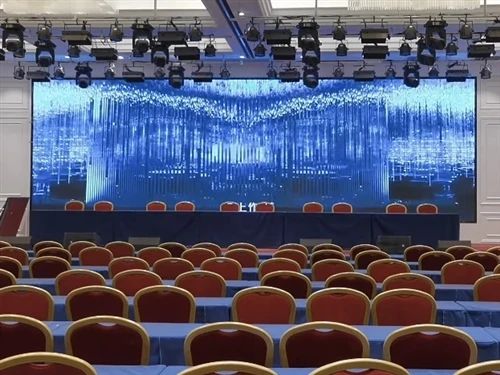
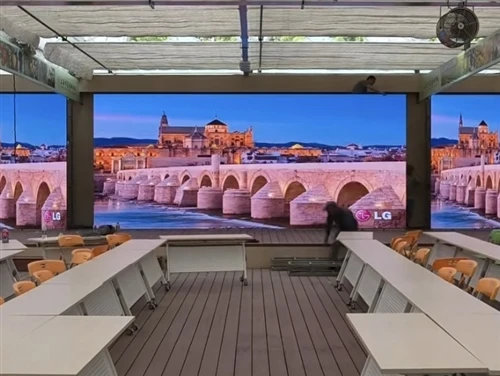
The color reproduction of LED displays is truly superb! Just like the advertising screens you see in high-end shopping malls, their colors are always so vibrant and realistic, as if the real objects are right in front of you.
This is because LED displays have undergone professional color calibration, enabling them to accurately reproduce the original colors.
For example, a testing organization conducted an experiment where they took a color photograph and displayed it on an LED display.
After comparing it with the original image, they found that the colors were almost identical, with very little error, demonstrating the extremely high color accuracy of LED displays.
So how do LED displays achieve such accurate color reproduction? This is inseparable from calibration and optimization.
Just like adjusting a television, LED displays also need to adjust parameters such as brightness, contrast, and saturation to make the colors appear more uniform and accurate.
Furthermore, some high-end LED displays are now equipped with automatic color management systems that can automatically adjust colors according to the content being played, making the picture look even more lifelike.
2) Color Gamut (Color Range)
Color gamut is essentially the concept of the range of colors. Just like your colored pencil case contains red, yellow, blue, and other colored pencils, the range of colors these pencils can depict is your "color gamut." For a display screen, the color gamut is the range of all colors it can display.
LED displays have a significant advantage in color gamut, meaning they can display an exceptionally wide range of colors. For example, there's a color gamut standard called P3, which is much wider than the standard RGB color gamut, displaying more and more vibrant colors.
Just like drawing with colored pencils, the more colors the pencils use, the more colorful the drawing. The same applies to LED displays; the wider the color gamut, the more realistic and vivid the displayed image.
Compared to traditional CRT and LCD monitors, LED displays indeed have a much larger color gamut. It's like comparing the works of two painters: one painter can only use a few colors, while the other can use many.
Of course, more colors make a better painting! LED displays work the same way. They can display more colors, so the image looks more beautiful.
3) Color Consistency
For large-scale splicing or multi-point LED displays, color consistency is crucial. Just like assembling a large jigsaw puzzle, if the colors of each small piece are inconsistent, the overall image will look unattractive.
Similarly, if the colors of different parts of an LED display are inconsistent, the overall image will appear chaotic.
However, current LED display technology is very advanced. Through technological innovation, higher color consistency can be achieved. For example, using high-quality LED chips in conjunction with an advanced color management system can ensure that the color of each pixel remains consistent.
Just like choosing colored pencils, if each pencil is of uniform color, the resulting drawing will be more beautiful. The same applies to LED displays; through optimized design and technological innovation, maintaining consistent colors throughout the image results in a more aesthetically pleasing display.