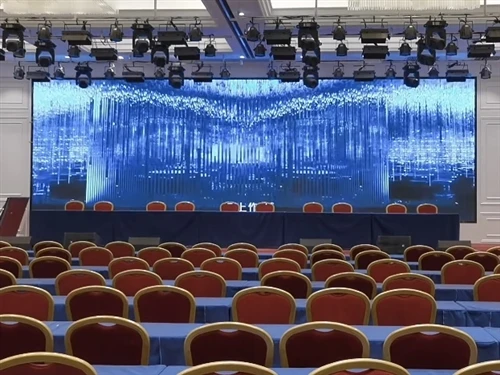
When choosing between LED displays, LCD screens, and DLP walls, a comprehensive judgment is needed, considering core factors such as application scenarios, display effect requirements, budget, and installation environment. Here is a detailed analysis:
I. Choosing Based on Display Effect Requirements
LED Displays
Advantages: Wide color gamut, strong color performance, fast response speed, no ghosting or blurring issues, supports seamless splicing, suitable for scenarios requiring high image integrity.
Suitable Scenarios: High-end large-screen applications (such as summits, press conferences, large command centers), environments requiring long-distance viewing or seeking an immersive visual experience.
DLP Walls
Advantages: Better performance in terms of splicing seams and mirror reflections than LCDs, better heat control than small-pitch LEDs, higher image stability.
Disadvantages: Lower brightness, weaker resolution and heat dissipation than LCDs, while splicing seams and reflections are better than LCDs but not as good as LEDs.
Suitable Scenarios: Moderate scenarios where brightness requirements are not high and a balance between splicing seams and reflections is needed, such as ordinary conference rooms or monitoring rooms.
LCD Screen
Advantages: High resolution, clear image details, mature technology, and relatively low cost.
Disadvantages: Obvious seams (even 1.8mm seams are visible to the naked eye), susceptible to glare from external light.
Suitable Scenarios: Scenarios requiring high resolution, with limited budgets and acceptable seams, such as small conference rooms or classrooms.
II. Choosing Based on Installation Environment and Space
LED Display Screen
Flexibility: Supports irregular shapes (e.g., curved, circular), adaptable to complex space designs.
Space Requirements: Requires space for heat dissipation, but is usually thinner, suitable for scenarios with limited space or requiring creative installation.
DLP Curtain Wall
Space Requirements: Larger size, requires sufficient installation depth, suitable for environments with ample space and low brightness requirements.
LCD Screen
Space Requirements: Thinner splicing units, but the overall thickness increases after splicing, requiring consideration of wall load-bearing capacity and heat dissipation.
III. Choosing Based on Budget and Cost
LED Display Screen
Cost Trends: With technological advancements, indoor micro-pitch LED prices are becoming more affordable, but high-end models remain expensive.
Long-term costs: Long lifespan (typically over 100,000 hours), low maintenance costs, suitable for long-term use scenarios.
DLP screen cost: Between LED and LCD, initial investment is higher but lower than high-end LED, long-term maintenance costs are moderate.
LCD screen cost: Lowest initial investment, but splicing gaps and reflection issues may require additional budget to address (e.g., anti-reflective glass).
IV. Selection based on usage scenario priority
Scenarios prioritizing LED displays: Seamless splicing or irregularly shaped displays are required (e.g., creative stages, exhibitions).
High requirements for color reproduction and dynamic images (e.g., video conferencing, advertising).
Scenarios with ample budgets and a pursuit of a high-end image (e.g., corporate showrooms, government command centers).
Scenarios prioritizing DLP screens: Moderate sensitivity to splicing gaps and reflections, and a balance between cost and effect is required (e.g., ordinary monitoring rooms).
Ambient lighting is relatively dim or brightness requirements are not high (e.g., underground conference rooms).
Scenarios prioritizing LCD screens: Limited budgets and a need for high-resolution displays (e.g., data monitoring, educational demonstrations). For installations with limited space and high tolerance for seam widths (e.g., small retail stores):
V. Comprehensive Decision-Making Recommendations
Clarify Core Needs: Prioritize display performance, budget, and installation environment.
Field Testing: Request a demo unit from the supplier to observe actual performance issues such as seam widths, glare, and color.
Consider Scalability: If future resolution upgrades or size increases are possible, prioritize modular designs (e.g., LED).
Assess Maintenance Costs: LEDs have a long lifespan but require professional repairs; LCDs offer easier unit replacement but seam widths may deteriorate.
Example Decision Process:
If seamless high-definition display is required and the budget is sufficient:** Choose an LED display.
If a balance between cost and performance is needed and ambient light is low:** Choose a DLP screen.
If low-cost, high-resolution display is required and seam widths are acceptable:** Choose an LCD screen.