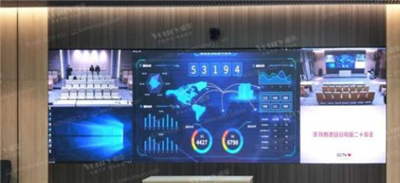
We often hear different names for LED displays, such as indoor LED displays and outdoor LED displays. But do you know the differences between them?
If we only consider the literal meaning, indoor LED displays are used indoors, and outdoor LED displays are used outdoors. However, in addition to this basic difference, they also differ significantly in product specifications, brightness, characteristics, manufacturing process, applications, and installation and protection measures.
I. Different Product Specifications
This difference mainly refers to the fact that indoor LED displays usually use products with smaller pixel pitches, while outdoor LED displays usually use products with larger pixel pitches.
Because in indoor displays, the user is closer to the LED screen, and the resolution of the displayed content is higher, and the requirements for visual viewing effects are also higher. Therefore, the resolution of the LED display must be increased to improve clarity and achieve a better visual viewing experience. The main LED display pixel pitch specifications used include P4, P3, P2.5, P2, P1.8, P1.6, P1.5, P1.25, P0.9, etc.
For outdoor applications, the viewing distance is usually very far, reaching tens or even dozens of meters. In this case, the user's requirements for the resolution of the LED display are not as high, so products with larger pixel pitches are usually used, mainly including P5, P6, P8, P10, P12, P15, P20, etc.
II. Different Brightness
Due to the generally lower ambient light indoors, the brightness of LED displays designed for indoor use is not made too high. Outdoor LED displays, however, take into account factors such as direct sunlight, and their brightness is made higher to ensure that the displayed content can still be clearly seen even in strong sunlight during the day. This difference in brightness is another product difference besides the pixel pitch difference.
III. Different Manufacturing Processes
LED displays used indoors require more refined and stable manufacturing processes. Therefore, they usually incorporate a lamination process, and some small-pitch products also use COB packaging technology. The purpose is to reduce the failure rate of LED lamps and reduce after-sales service issues. Outdoor LED displays, however, utilize a more traditional surface-mount packaging process, but they incorporate a potting process primarily for waterproofing.
IV. Different Applications
Indoor LED displays have a wide range of applications. Besides conventional advertising and promotional displays, they are also used in various fields such as conferences, big data display, command and control centers, and media promotion. This wider range of applications is due to the very small pixel pitch of indoor LEDs, allowing for a variety of specifications suitable for different uses. Outdoor LED displays are primarily used for advertising and text display. Examples include displays used in outdoor squares for product advertising and displays in public places like train stations to show train schedules – these are typical outdoor screen applications.
V. Different Installation Methods
Indoor LED displays also differ significantly from outdoor LED displays in terms of installation. For example, indoor screens, in addition to modules, also have a cabinet structure, allowing for installation embedded in walls, mounted against walls, or on a separate stand. Outdoor LED displays, on the other hand, often require supporting columns and waterproofing measures, and also require cooling equipment such as air conditioning due to high outdoor temperatures in the summer.
In summary, there are many differences between indoor and outdoor LED displays, not only at the product level but also in terms of installation, manufacturing processes, and applications. Therefore, when choosing which type of LED display to use, whether it will be used indoors or outdoors remains a crucial factor, and this should be the basis for selecting the appropriate product.