LED Display Panels: A Complete Buyer's Guide
Choosing the wrong LED display panel can mean wasted budget, poor visibility, or a screen that fails within a year. Whether you're outfitting a retail store, a stadium, or a conference room, understanding how these panels work - and what separates a good one from a poor one - will save you time and money.
What Are LED Display Panels?
LED display panels are modular screen units that use light-emitting diodes (LEDs) as their light source to produce images, video, and text. Unlike traditional LCD screens that rely on a backlight behind a liquid crystal layer, LED panels emit light directly or use LEDs as a highly efficient backlight. They can be assembled in various sizes and configurations, making them a flexible solution for both indoor and outdoor environments.
Most commercial LED display panels are built from smaller, repeating cabinet modules, which makes installation, maintenance, and future expansion more manageable. This modularity is one of the key reasons they are widely adopted in large-format display applications.
Common Types of LED Display Panels
Understanding the main categories helps narrow down the right choice for your specific use case.
Direct-View LED vs. LED-Backlit LCD
Direct-view LED panels use clusters of red, green, and blue LEDs to form each pixel directly. These are the large-format panels commonly seen on billboards, sports arenas, and stage backdrops. LED-backlit LCD panels, on the other hand, use LEDs purely as a backlight source behind a traditional LCD layer - these are more common in consumer televisions and smaller commercial displays.
For large-scale or high-brightness applications, direct-view LED panels are generally the more practical choice.
Indoor vs. Outdoor LED Panels
| Feature | Indoor LED Panels | Outdoor LED Panels |
|---|---|---|
| Typical brightness | 800–2,000 nits* | 5,000–10,000 nits |
| Pixel pitch | Smaller (finer detail) | Larger (viewed from distance) |
| Weatherproofing | Not required | IP65 or higher typically needed |
| Cabinet design | Lightweight, slim | Rugged, sealed |
| Common use | Lobbies, stages, studios | Billboards, facades, stadiums |
*Nit: a unit of brightness measurement (1 nit = 1 candela per square meter).
Where LED Display Panels Are Used
LED display panels appear across a wide range of industries, partly because their modular design allows for almost any screen size or shape.
Retail and Commercial Spaces
In retail environments, LED panels are used for dynamic signage, promotional displays, and wayfinding. Their ability to display full-motion video and be updated remotely makes them a practical alternative to printed signage.
Events and Entertainment
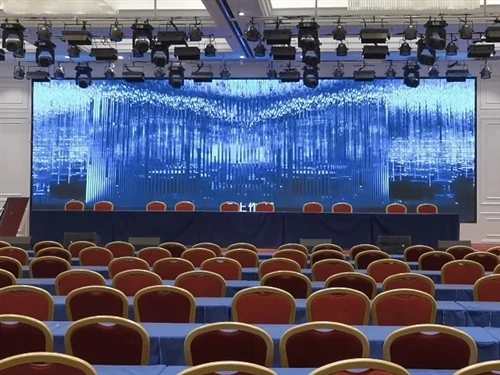
Concerts, corporate events, and trade shows rely heavily on LED display panels for stage backdrops and audience-facing screens. Rental-grade panels are typically built with quick-lock mechanisms to allow fast setup and teardown without specialized tools.
Outdoor Advertising and Public Spaces
Roadside billboards, transit hubs, and sports stadiums are among the most visible applications. Outdoor panels need to maintain legibility in direct sunlight, which is why high brightness ratings and anti-glare surface treatments are standard features in this category.
Control Rooms and Command Centers
In environments where operators need to monitor multiple data streams simultaneously, fine-pitch LED panels (pixel pitch below 2mm) offer seamless, large-format visualization without the bezels (the frame borders) that interrupt the image on multi-monitor LCD setups.
Key Factors to Evaluate Before Buying
Pixel Pitch
Pixel pitch (P) refers to the distance in millimeters between the centers of two adjacent pixels. A smaller pixel pitch means higher pixel density and sharper images - but also a higher cost. As a general rule, the closer your audience will be standing to the screen, the smaller the pixel pitch you need.
P1.2–P2.5: Suited for close-viewing indoor environments (control rooms, boardrooms)
P2.5–P5: Common for indoor stages, retail, and lobbies
P6–P10+: Typical for outdoor billboards and stadium screens
Brightness and Refresh Rate
Brightness is measured in nits. Indoor panels generally need lower brightness than outdoor ones. Refresh rate (Hz) - the number of times per second the image is redrawn - affects how smooth the display looks, especially when captured on camera. A higher refresh rate (typically 3,840Hz or above) reduces flickering in recorded footage, which matters for broadcast and event applications.
IP Rating for Outdoor Use
IP (Ingress Protection) rating indicates how well the panel resists dust and moisture. IP65 means the panel is fully dust-tight and protected against water jets - a common baseline for outdoor LED installations. Panels in coastal or high-humidity environments may benefit from higher-rated protection.
Power and Heat Management
LED panels generate heat during operation. Adequate heat dissipation design - whether through passive ventilation or active cooling - affects both performance and long-term reliability. In large installations, total power consumption also becomes a significant operational cost consideration.
Serviceability
Front-access serviceability means technicians can replace faulty modules from the front of the screen without dismantling the entire structure. For wall-mounted or tight-space installations, this feature can substantially reduce maintenance time and cost.
Summary and Buying Recommendations
LED display panels offer a durable, high-brightness, and scalable solution for a broad range of display needs. Before committing to a purchase, it's worth clarifying a few essentials:
Define your viewing distance first - this determines the appropriate pixel pitch range
Match brightness to your environment - avoid over-specifying for indoor use, or under-specifying for outdoor
Check IP rating requirements - especially for any partially or fully outdoor installation
Ask about serviceability - front-access panels simplify long-term maintenance
Confirm certifications - look for recognized safety and electromagnetic compliance certifications relevant to your region (such as CE, FCC, or UL)
A well-specified LED panel installation can deliver reliable performance for many years. Taking the time to match specifications to actual use conditions is generally more important than chasing the highest-spec panel on paper.
Frequently Asked Questions
Q1: What is a good pixel pitch for an indoor LED display panel?
For typical indoor viewing distances of 3–6 meters, a pixel pitch in the P2.5–P4 range is generally a practical starting point. Closer viewing distances warrant smaller pixel pitches.
Q2: How long do LED display panels typically last?
Most manufacturers rate LED panels at 50,000–100,000 hours of operational life, though actual longevity depends on operating conditions, brightness settings, and maintenance practices. These figures represent industry-common specifications and should be verified with your supplier.
Q3: Can LED display panels be used outdoors in all weather conditions?
Panels with an IP65 rating or higher are generally designed to withstand rain, dust, and varying temperatures. However, extreme conditions - such as direct water submersion or temperatures outside the panel's rated operating range - may affect performance. Always check the manufacturer's environmental specifications.
Q4: What is the difference between SMD and COB LED panels?
SMD (Surface-Mounted Device) LEDs are individual components mounted to a circuit board - currently the most common construction type. COB (Chip-on-Board) embeds multiple LED chips directly onto a substrate, which can offer improved uniformity and durability in some applications. COB technology is more common in fine-pitch panels.
Q5: Do LED display panels require professional installation?
For small-scale or lightweight indoor panels, installation may be manageable without specialist help. However, large outdoor installations, structural mounting, and high-voltage electrical connections typically require qualified professionals to ensure safety and compliance with local regulations.