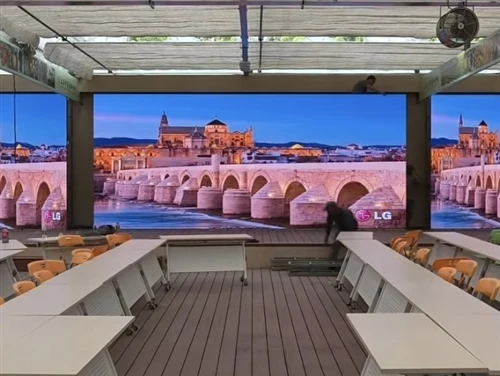
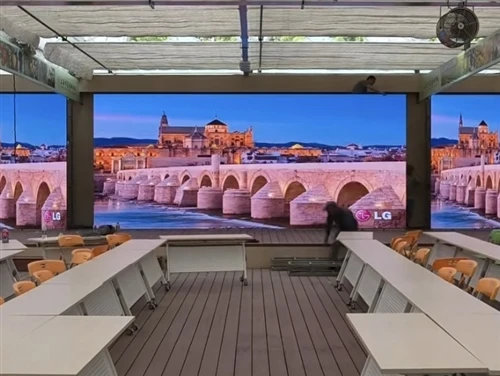
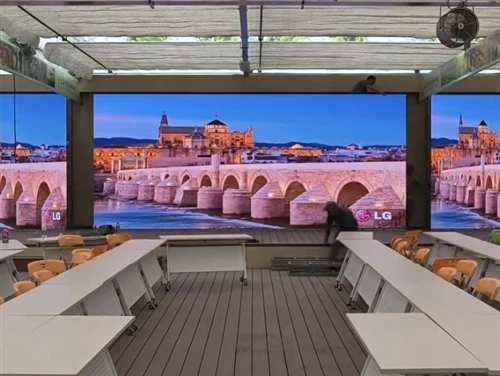
In today's era where digital transformation and efficient collaboration are core competitive advantages for businesses, a high-quality indoor LED display and LED conference system have become standard equipment for modern conference rooms, command centers, and exhibition halls. However, faced with the complex array of brands and solutions on the market, the quotations often vary significantly, leaving buyers confused. This article aims to deeply analyze the core factors affecting system quotations and provide scientific budget planning ideas to help companies make informed decisions.
I. Core Factors Affecting Indoor LED Display Quotations
The quotation for an indoor LED display is not simply the price of a single product, but a comprehensive reflection of a systematic engineering project. Its main cost components are as follows:
LED display unit cost: This is the basic cost, mainly determined by:
Pixel pitch: Such as P1.2, P1.5, P1.8, etc. The smaller the pitch, the higher the resolution and the clearer the display, but the number of LED beads used per unit area increases exponentially, and the price also increases. The pitch should be chosen reasonably based on viewing distance and content detail.
LED bead brand and packaging technology: Modules using high-quality LED beads (such as Nationstar, Jingtai, etc.) and advanced packaging technologies (such as COB, IMD) perform better in brightness, color consistency, reliability, and lifespan, and the cost increases accordingly.
Product series: Conventional indoor fixed-installation screens, small-pitch LED screens, transparent screens, creative irregularly shaped screens, etc., have progressively increasing technical difficulty and cost.
Control system and accessories cost: Including sending cards, receiving cards, video processors, power distribution cabinets, cables, etc. A stable and efficient control system is key to ensuring the long-term stable operation of the screen.
Structural design and installation and commissioning costs: The customized cabinet structure, brackets, and professional installation, commissioning, and calibration services based on the installation environment (such as whether front maintenance is required, wall load-bearing capacity, and heat dissipation requirements) are an indispensable part of the quotation.
II. Composition and Considerations of LED Conference System Quotations
Modern LED conference systems have gone beyond a single display function, integrating audio, video, control, and collaboration software. Their quotations reflect the value of the overall solution.
Display terminal: That is, the indoor LED display mentioned above, as the visual core of the system. Audio Acquisition and Amplification System: Includes omnidirectional microphones, array microphones, audio processors, power amplifiers, and speakers. Ensures clear voice pickup and reproduction from any location in the conference room, eliminating echo and feedback.
Video Conferencing and Collaboration Module: Integrates cameras (supporting tracking and wide-angle), codecs, and is compatible with mainstream cloud conferencing platforms (such as Tencent Meeting, Zoom, Teams) or local conferencing software. Supports wireless screen mirroring, multi-screen interaction, and whiteboard writing functions.
Central Control System: Allows for one-click, intelligent control of all conference room equipment (displays, lighting, curtains, audio, video sources) via a touchscreen or mobile app, significantly improving user experience and efficiency.
III. Scientific Budget Planning and Service Provider Selection
When faced with varying price quotes, companies should avoid simply pursuing the lowest price and instead focus on "Total Cost of Ownership (TCO)" and long-term value.
Clearly define needs and scenarios: Is it for daily meetings, remote collaboration, data visualization, or brand presentation? Different scenarios have different requirements for display accuracy, refresh rate, audio quality, and collaboration functions, directly impacting configuration and budget.
Focus on system integration and stability: An excellent system relies on seamless collaboration between subsystems and long-term stable operation. Choosing a service provider that can provide a one-stop solution from design, products, installation to after-sales training is crucial.
Consider after-sales service and maintenance costs: The warranty period, response speed, spare parts supply, and potential future maintenance costs of the LED display should all be included in the procurement evaluation framework.