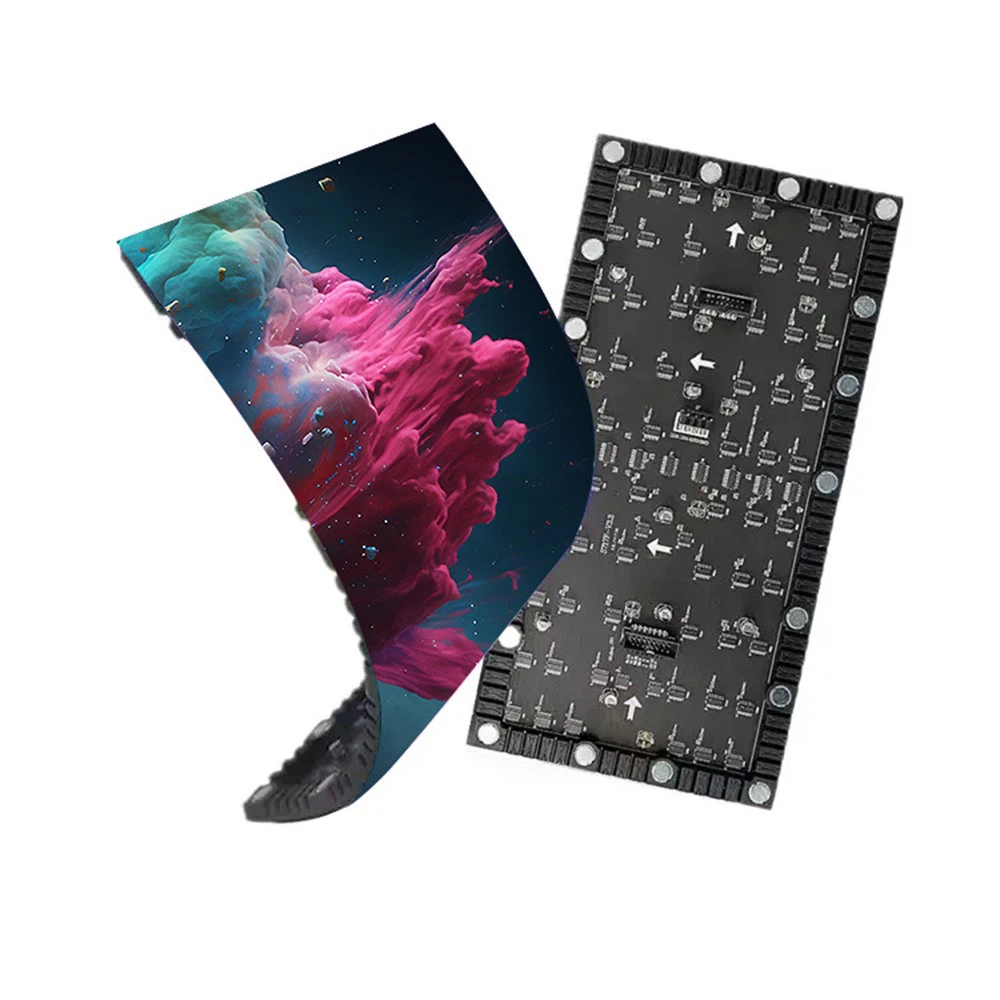
The LED display market is undergoing tremendous changes, with consumers no longer satisfied with conventional LED displays. To meet personalized demands for audiovisual experiences and maximize audience attention, various irregularly shaped LED screens have emerged. Beyond traditional information display functions, their shape requirements are also increasing, better adapting to the overall structure and usage requirements of the environment. Today, we'll explore this topic.
Irregularly shaped LED screens are special-shaped LED displays modified from conventional LED displays. Unlike the rectangular or flat panel shapes of conventional LED displays, they come in a variety of shapes, including irregular splicing screens, spherical screens, curved screens, L-shaped screens, hexahedrons, letters, and other irregular and unique shapes.
So what are the characteristics of these irregularly shaped screens?
1. Irregularly Shaped LED Screens Emphasize Structural Breakthroughs
Compared to conventional LED displays, irregularly shaped LED displays emphasize structural breakthroughs. Irregularly shaped LED screen modules mainly come in fan-shaped, arc-shaped, circular, cylindrical, and triangular structural forms. LED irregular-shaped screens are geared towards users with specific needs, primarily used in performance venues, outdoor media, exhibition halls, and plazas. Due to the diverse appearances and structures of these screens, the technical requirements for manufacturers are more stringent. The complex circuitry and structural design of LED irregular-shaped screens places high demands on manufacturers' R&D capabilities.
2. Irregular-shaped modules enable greater creativity in LED irregular-shaped screens.
For a long time, LED irregular-shaped screens were achieved by assembling or edge-wrapping traditional rectangular planar modules. The most common irregular-shaped LED screens were large-radius curved screens and flat circular screens, which resulted in inconsistent display and pixelation issues, leading to poor overall screen quality. To address these problems, SoftScreen Optoelectronics has developed triangular, trapezoidal, and other irregular-shaped modules, which can be assembled into various regular or irregular geometric shapes such as spheres, rhombuses, gemstones, and stars for LED displays.
LED irregular-shaped screens are characterized by their thinness, high pixel density, ability to display curved surfaces, and ease of installation. Multi-dimensional, all-around, and three-dimensional LED full-color displays are dynamic and visually impactful, greatly enhancing the functionality and aesthetic appeal of the displays. They are commonly used in exhibition halls, planning museums, digital exhibition halls, and other venues for displaying historical scrolls and film-like LED screens.