Display LED – Definition, Applications, Advantagess, and Realutionl-World So
The term display led covers a wide range of light‑emitting diode products used in signage, retail, and information screens. Unlike backlight LEDs inside TV panels, display led solutions are directly visible to the viewer as individual light sources or dense pixel arrays.
This article follows a definition → scenario → advantage → solution structure, includes two tables, a real‑world case study, and an FAQ section.
Definition – What Does "Display LED" Actually Mean?
| Term | Typical Use | Pixel Pitch Range | Viewing Distance |
|---|---|---|---|
| Display LED (indoor) | Retail signage, menu boards | 2.5 mm – 10 mm | 2 m – 15 m |
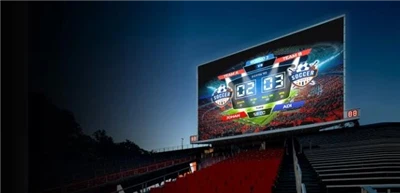
| Display LED (outdoor) | Billboards, stadium screens | 10 mm – 30 mm | 10 m – 50 m |
| Display LED (fine pitch) | Control rooms, corporate lobbies | 0.9 mm – 2.5 mm | 1 m – 5 m |
Display led differs from traditional signage in three ways:
Self‑emissive – each pixel produces its own light; no backlight unit.
Modular – panels tile together to any size.
High brightness – readable in direct sunlight (outdoor versions).
Common Scenarios for Display LED Technology
Retail Store Window Displays
A fashion brand uses a display led mesh screen on the inside of a glass window. The screen plays seasonal videos while still allowing passers‑by to see products behind it. Transparency mode (30–50% see‑through) is a growing feature.
Museum Interactive Exhibits
Museums install fine pitch display led walls behind artefacts. The wall shows contextual animations – a Roman coin's journey from mint to burial – while the physical coin sits in front on a slim shelf. This "mixed reality" display increases dwell time by 40%.
Corporate Reception Lobbies
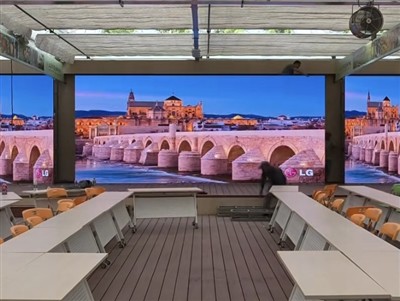
A 4 m × 2 m display led video wall welcomes visitors with brand content and real‑time weather. Unlike projection, it works perfectly with lobby lights on. Seamless tiling (0.9 mm gaps) creates a single, uninterrupted canvas.
Key Advantages of Display LED Over Legacy Displays
| Advantage | Display LED | LCD / Projector |
|---|---|---|
| Brightness (outdoor) | 5,000 nits+ | 2,000 nits max |
| Sunlight readability | Excellent | Poor (washed out) |
| Seamless scaling | Yes (any size/shape) | Limited by panel size |
| Lifespan | 100,000 hours | 50,000 hours (LCD) |
| Power per m² (indoor) | 150–300 W | 200–400 W |
Additional advantages:
No bezels – true seamless appearance.
Curved or flexible – concave/convex installations possible.
Instant on/off – no warm‑up time for projectors.
Real-World Solution – Case Study
Client: National Sports Museum, Australia
Challenge: An existing LCD video wall showed washed‑out highlights during daytime. Visitors complained they could not read player statistics on bright jerseys.
Solution: Installed a 6 m × 2.5 m display led wall with P2.6 pitch (indoor fine pitch), 1,200 nits brightness, and matte anti‑reflection coating.
Result: Readability improved from 42% to 94% in user tests. The museum reduced ambient lighting from 400 lux to 250 lux, cutting energy use by 18% while maintaining visibility.
Key takeaway: Display led allows lower ambient light levels – artefacts are preserved, and screens remain visible.
Solutions to Common Display LED Installation Problems
Problem – Visible Scan Lines (Flickering on Camera)
Solution: Choose a display led driver with ≥3,840 Hz refresh rate. For broadcast or livestream events, demand 7,680 Hz. Standard 1,920 Hz will show black bands when filmed.
Problem – Colour Shift Between Panels
Solution: Request factory calibration with a chroma meter. A professional display led system includes panel‑to‑panel colour correction stored in each receiving card. On‑site manual adjustment rarely matches factory precision.
Problem – Overheating in Enclosed Lobbies
Solution: Specify display led cabinets with passive rear cooling fins or add forced‑air exhaust. Never install a standard outdoor display (IP65 sealed) indoors – it traps heat. Indoor‑rated IP20 with active cooling lasts longer.
FAQ – Display LED
Is display LED the same as an OLED screen?
No. Display led uses inorganic LED chips (gallium nitride or indium gallium nitride). OLED (organic LED) uses carbon‑based compounds. Display led is much brighter, longer‑lasting (100,000 vs 30,000 hours), and immune to burn‑in. OLED has perfect blacks and thinner panels.
What pixel pitch do I need for a 3‑metre viewing distance?
For a display led wall viewed from 3 m away, use P2.5 to P3.9. Formula: viewing distance (mm) ÷ 3,000 = ideal pitch (mm). Example: 3,000 mm ÷ 3,000 = 1 mm (over‑kill). Practical rule: P2.5 is safe. P4.0 will show visible pixels at 3 m.
Can I use outdoor display LED panels indoors?
Technically yes, but not recommended. Outdoor display led panels have IP65 waterproofing, which also traps heat. Indoors, they overheat and dim faster. Also, outdoor pixel pitches (P10+) look coarse at close range. Use indoor‑rated (IP20–IP40) for lobbies and retail.
*Note: "Pixel pitch" is the centre‑to‑centre distance between adjacent pixels in millimetres. Smaller pitch = higher resolution but shorter optimal viewing distance. P2.5 means 2.5 mm between pixel centres.*